 Save to Pinterest
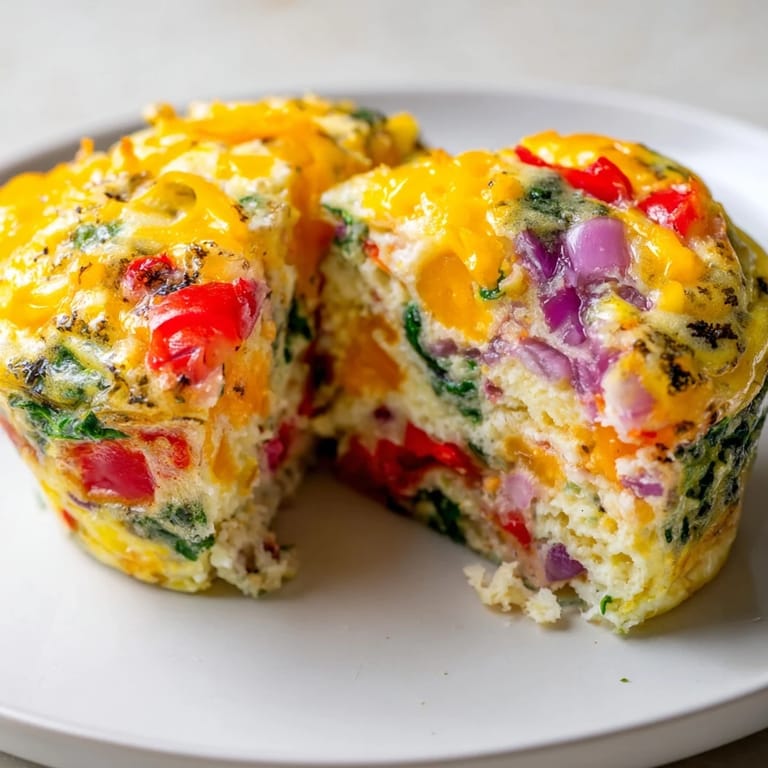
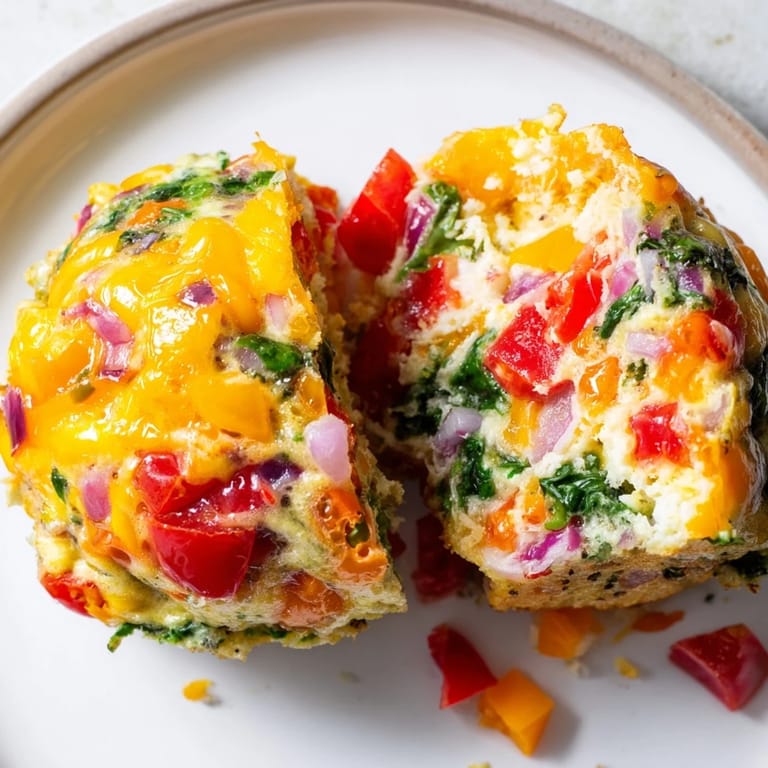
 I discovered egg muffins by accident one Wednesday morning when I had leftover vegetables scattered across my counter and zero time before work. Instead of tossing them, I grabbed a handful of eggs, threw everything into a muffin tin, and baked them out of pure necessity. Twenty minutes later, I pulled out these golden, fluffy little cups that tasted nothing like a scramble—they had this delicate, airy texture that caught me completely off guard. Now I make them every Sunday, and they've become my answer to every breakfast question.
My neighbor watched me pop a batch into the oven and asked what smelled so good. When I offered her a warm one straight from the tin, she bit into it and immediately asked for the recipe, then came back three days later saying she'd made five batches already. That's when I realized these weren't just convenient; they were genuinely delicious enough to share without apology.
Ingredients
- Eggs: Eight large ones become the tender foundation that holds everything together; they're what transforms simple vegetables into something fluffy and substantial.
- Milk: Just a quarter cup creates an incredibly soft crumb, and dairy-free works just as well if that's your preference.
- Salt and black pepper: These aren't optional; they wake up every flavor you're adding and make the eggs taste like actual food.
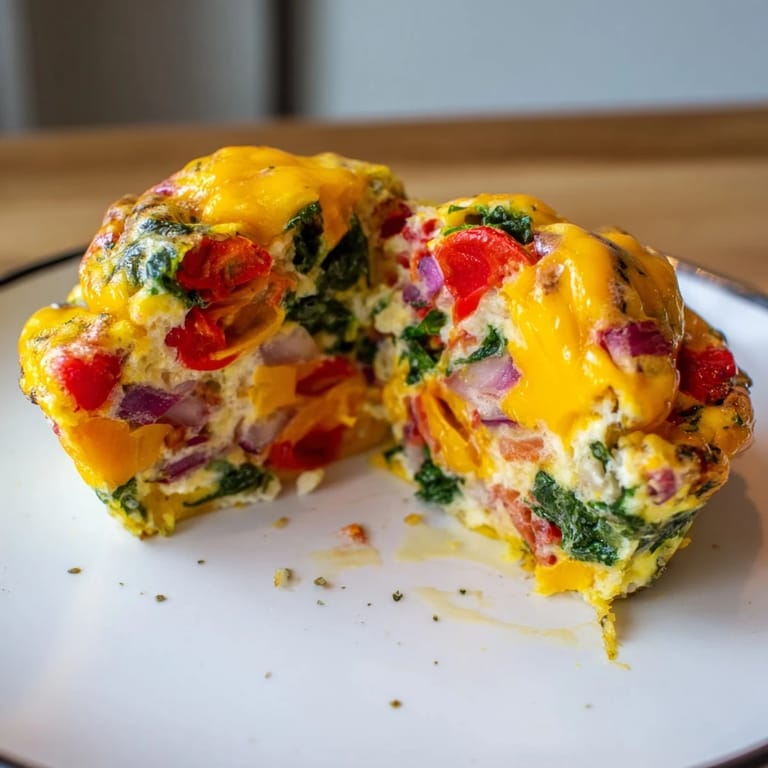
- Bell peppers, spinach, red onion, and tomatoes: Use whatever vegetables you have on hand, but aim for a mix of colors and textures so no two muffins feel boring.
- Cheddar cheese: The sharp bite of cheddar is perfect here, though feta brings a tanginess and mozzarella makes them extra creamy.
- Bacon or sausage: Completely optional, but a little renders out beautiful fat that flavors everything around it.
- Fresh herbs: Parsley adds brightness, chives give you a gentle onion note, and basil makes them almost taste Mediterranean.
Tired of Takeout? 🥡
Get 10 meals you can make faster than delivery arrives. Seriously.
One email. No spam. Unsubscribe anytime.
Instructions
- Prepare your pan and preheat:
- Set your oven to 350°F and get your muffin tin ready with nonstick spray or liners while the oven heats; cold pans mean uneven cooking.
- Whisk the base:
- Combine eggs, milk, salt, and pepper in a large bowl, whisking until the mixture looks slightly frothy and unified. This creates air pockets that make the muffins tender rather than dense.
- Add everything else:
- Toss in your vegetables, cheese, and any extras, stirring gently until evenly distributed so each muffin gets a fair share of the good stuff.
- Fill and bake:
- Divide the mixture so each cup is about three-quarters full, then slide into the oven for 18 to 22 minutes. They're done when the center doesn't jiggle and the tops are lightly golden.
- Cool and serve:
- Let them rest in the tin for five minutes so they can set completely before you run a knife around the edges and pop them out. Warm is best, but they're also perfect cold straight from the fridge.
 Save to Pinterest
 I brought these to a potluck and watched people take one, expecting something unremarkable, then visibly pause mid-bite realizing they'd just grabbed a third. That moment when food becomes something people actually want more of—that's what these do.
Customization Ideas That Actually Work
The beauty of this recipe is that your morning breakfast isn't locked into one formula. Zucchini adds moisture and almost disappears into the eggs, mushrooms bring umami, and broccoli gives you texture and nutrition in spades. I've made versions with sun-dried tomatoes, roasted red peppers from a jar, and even leftover roasted Brussels sprouts because why let good roasted vegetables go to waste. The only real rule is balance—too much water-heavy vegetable and you'll regret it, too little cheese and they feel sad.
Storage and Make-Ahead Magic
These muffins are built for real life. Store them in an airtight container in the fridge for up to four days, and they're honestly better cold than some people's hot breakfasts. If you want to get ahead, you can freeze them for two months and reheat in the microwave for about 30 seconds; they come back to life perfectly tender. I've even assembled the whole mixture the night before, refrigerated it, and baked it fresh in the morning when I wanted a warm breakfast.
Dietary Flexibility and Substitutions
This recipe adapts to whatever restrictions or preferences you're living with. Dairy-free means non-dairy milk and a dairy-free cheese alternative, and honestly, most people can't tell the difference once everything's baked. Gluten-free is automatic since there's no flour involved. The vegetarian version is already built in unless you add meat, and you can dial up the vegetables to make them feel even more substantial. Think of this as a template rather than a strict formula, and you'll never run out of combinations to try.
- Dairy-free versions work best with a plant-based milk that has some body to it, like oat or cashew, rather than the thin almond varieties.
- Make-ahead assembly saves actual cooking time if your mornings are chaos, and cold batter bakes perfectly well.
- Keep the muffins at about three-quarters full so they rise evenly and don't overflow the cups during baking.
 Save to Pinterest
 These egg muffins have become my answer to that chaotic question of what to eat when you're juggling too much. They're proof that breakfast doesn't have to be complicated to be actually good.
Common Recipe Questions
- → What vegetables work best in these egg muffins?
Diced bell peppers, spinach, red onion, and cherry tomatoes add vibrant flavor and texture, but zucchini, mushrooms, and broccoli are great alternatives.
- → Can I make these egg muffins dairy-free?
Yes, substitute milk with plant-based milk and omit cheese or use dairy-free cheese alternatives to keep the muffins dairy-free.
- → How should I store leftover muffins?
Store in an airtight container in the refrigerator for up to 4 days or freeze for up to 2 months. Reheat in the microwave before serving.
- → What is the ideal baking temperature and time?
Bake at 350°F (175°C) for 18 to 22 minutes until muffins are set and lightly golden on top.
- → Can I include meat in these muffins?
Yes, cooked crumbled bacon or sausage can be added as optional mix-ins to enhance flavor and protein content.