 Save to Pinterest
 The crackle of rice hitting a hot pan always pulls me right into the moment, but nothing sings quite like the aroma of kimchi and cabbage sautéing together. I whipped up this Kimchi Cabbage Fried Rice after a late-night pantry raid—hungry and curious, tossing together what I had left in the fridge. What started as make-do comfort food quickly became one of those accidental triumphs I crave on easy weeknights. The satisfying mix of tangy, spicy, and savory is exactly what my taste buds want after a busy day. Now, the popping sound of sesame seeds in the skillet practically means dinner magic at my house.
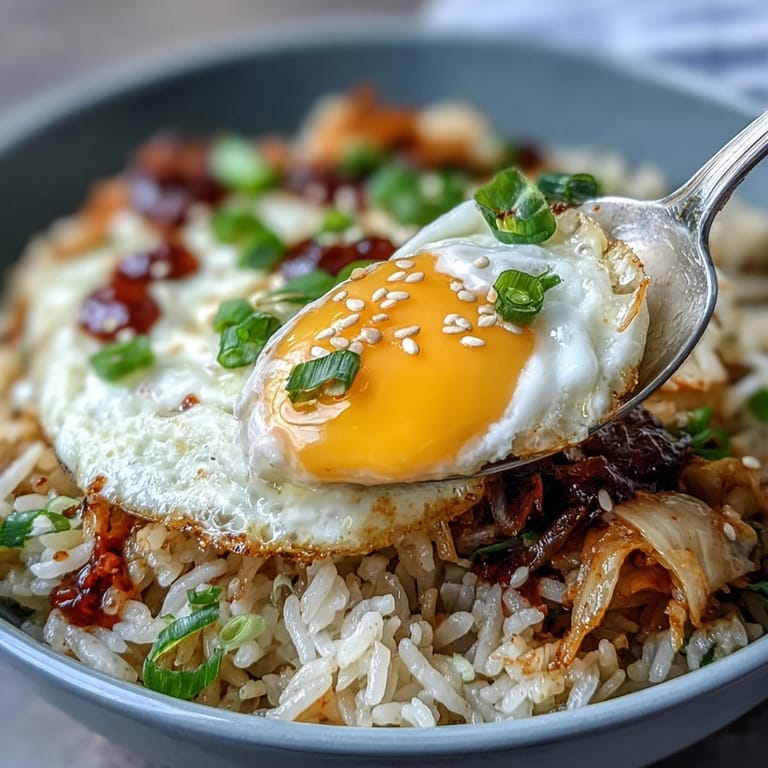
One rainy afternoon, I made this for a friend who showed up unexpectedly, shivering and soaked. The kitchen filled with vivid color and heat as we cooked together, and we laughed about how the kimchi’s tang cleared our heads faster than any umbrella. That spontaneous meal ended up being just what we both needed—warming us from the inside out. We still talk about how the yolk ran across the rice and tied everything together. Sometimes the best meals are the ones you never planned.
Ingredients
- Napa cabbage: Its subtle sweetness softens as it cooks—slice it thin for quick wilting and a delicate crunch.
- Kimchi (with juice): The more fermented, the bolder the flavor—use a little juice for an extra tangy kick.
- Green onions: Add bright freshness and a mild bite; save some for garnish to finish the dish with a pop of color.
- Carrot: Optional, but julienned carrot brings subtle sweetness and a cheerful hue to the plate.
- Cooked jasmine or short-grain rice: Day-old rice is essential for that slightly chewy, separated texture—fresh, hot rice will clump and go mushy.
- Soy sauce: For deep umami flavor; taste and adjust as every kimchi has a different saltiness level.
- Gochujang: Stir in for a fiery boost, but just a little goes a long way.
- Toasted sesame oil: The nutty fragrance stays with you—drizzle at the end so it doesn't lose its signature aroma.
- Sugar: A tiny bit balances the sourness of the kimchi perfectly, revealing hidden flavors.
- Ground black pepper: Rounds out the heat and cuts through the richness without overpowering.
- Large eggs: That gooey yolk transforms the rice, making each spoonful extra luscious.
- Neutral oil: Use something like canola or vegetable oil so the other flavors can shine.
- Toasted sesame seeds: A quick sprinkle at the end adds nutty crunch and pretty speckles.
- Extra green onions (for garnish): Never skip the garnish—the contrast of fresh with cooked is what makes this dish happy-food.
Tired of Takeout? 🥡
Get 10 meals you can make faster than delivery arrives. Seriously.
One email. No spam. Unsubscribe anytime.
Instructions
- Prep your ingredients:
- Set out your sliced veggies and whisk up a sense of anticipation just looking at the vibrant colors—don’t forget to chill your cooked rice ahead of time for best results.
- Sizzle the veggies:
- Heat half the oil in a large skillet over medium-high and tumble in the cabbage and carrots—the sizzling sound means you’re doing it right; sauté until just softened but still bright.
- Add kimchi and onions:
- Toss in the kimchi and green onions, letting their aromas mingle for a couple minutes until the kitchen smells alive and spicy.
- Rice reunion:
- Burst apart any clumps with a firm spatula, folding rice into the veggies and kimchi so each grain gets a little love and flavor.
- Season and stir-fry:
- Drizzle in soy sauce, gochujang if you want a punch of heat, sesame oil, sugar, and pepper; stir-fry with energy for a few minutes so everything is piping hot and coated evenly.
- Taste-test moment:
- Give it a quick taste—add more sauce or kimchi juice if you like it bolder, and don’t be afraid to adjust on instinct.
- Eggs sunny-side up:
- In a separate nonstick pan, use the rest of your oil and gently fry eggs until the whites are set but yolks are still luxuriously runny—it’s worth the extra pan.
- Finish and serve:
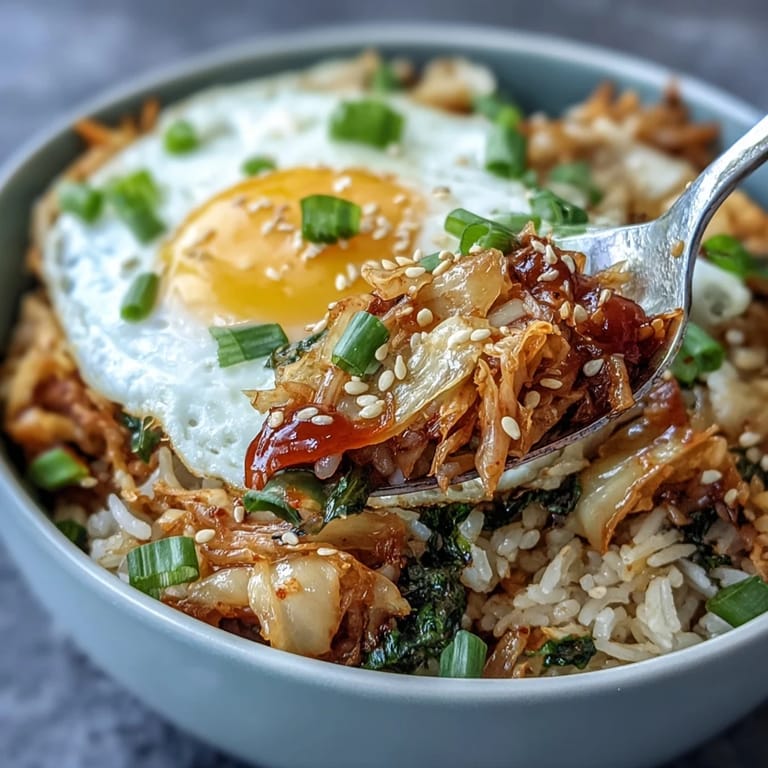
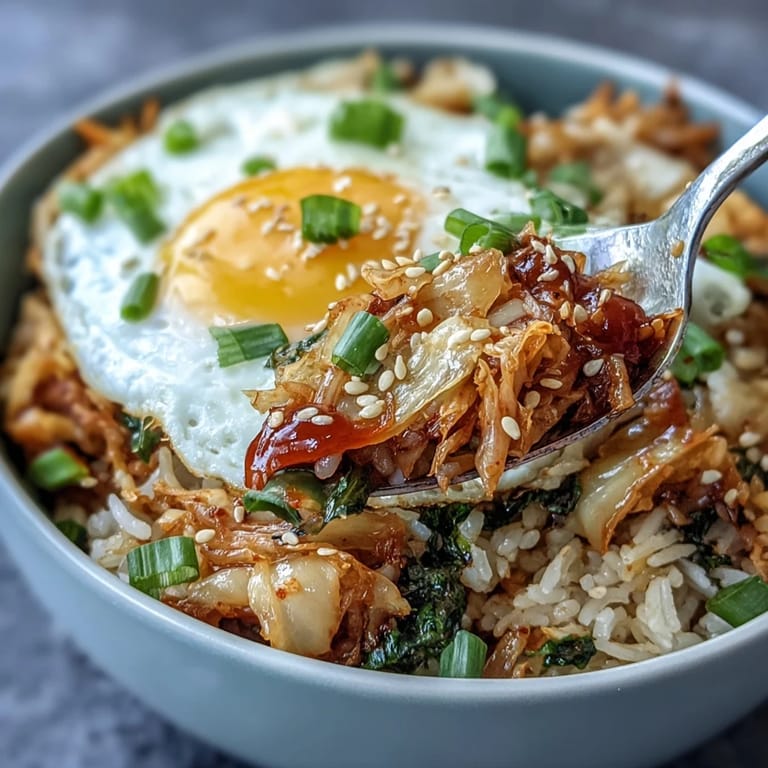
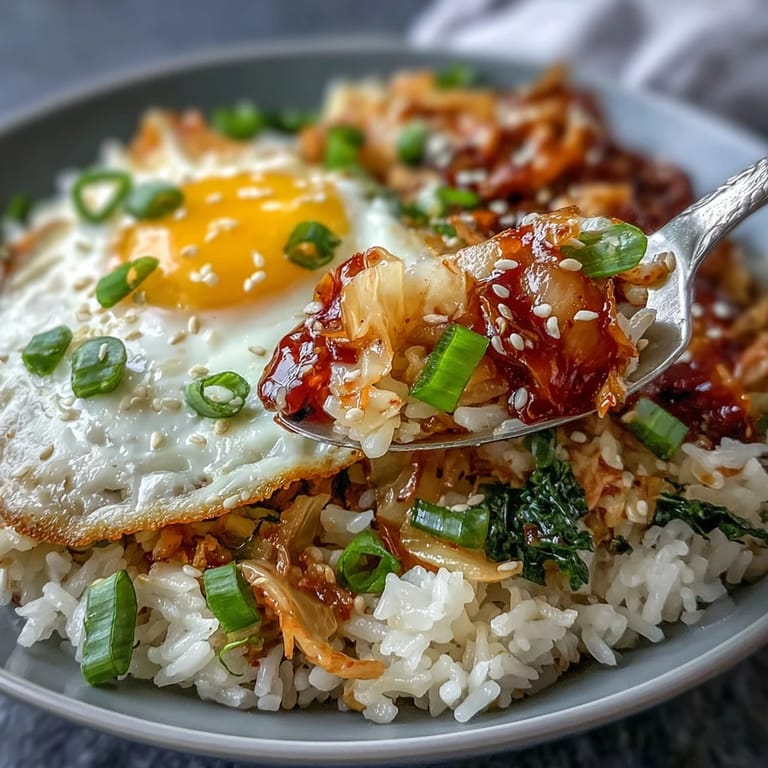
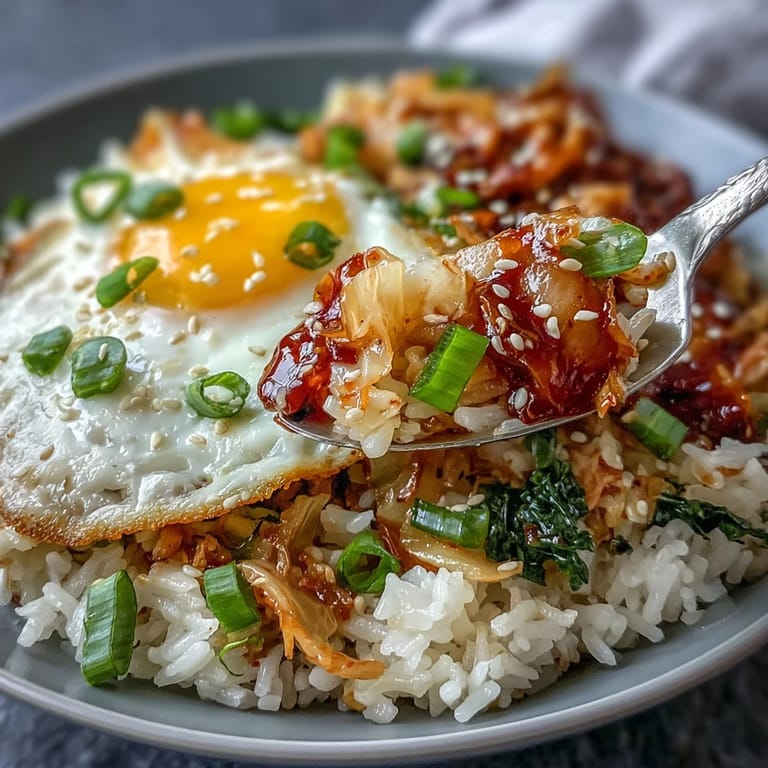
- Scoop rice into bowls, crown each with an egg, then scatter sesame seeds and fresh green onions to finish—you’ll want to dive in immediately.
 Save to Pinterest
  Save to Pinterest
 There was a night I ate this straight from the skillet, standing in my small kitchen, marveling at how dinner felt so extraordinary with such humble ingredients. That simple act—hot rice, spicy kimchi, a dreamy egg—reminded me that comfort doesn’t have to be complicated.
Switching It Up When You Want More
The best part about this recipe is how easily you can riff—swap in shiitake mushrooms, sprinkle in crispy tofu, or toss leftovers from the fridge right into the pan. I’ve even been known to pick out extra-hot kimchi for an over-the-top spicy version that’ll clear your sinuses. Trust your cravings: this is one of those rare dishes that forgives swap-outs and surprises. Just don’t skimp on the texture, or you’ll miss half the joy.
Making It Yours Without Fuss
No need to get too precious about fancy tools or perfect knife skills—a big skillet, a loose wrist with the spatula, and a can’t-go-wrong spirit are all you really need. The real trick is tasting along the way; don’t wait for a timer, use your senses to judge when it’s just right. Sometimes dinner is less about technique and more about listening: to your taste buds, to the sizzle in the pan, or even to whoever’s waiting impatiently for their bowl.
Little Fixes That Change Everything
If your rice is sticking, let it sit for thirty seconds untouched before scraping—a bit of patience rewards you with caramelized edges. Garnishing with plenty of fresh green onions and sesame seeds turns an everyday dinner into a kitchen victory. When I remember to heat the skillet really well before starting, the difference in texture is night and day.
- If out of kimchi, a splash of rice vinegar and chili flakes can fake some of the zing.
- Serve with pickled veggies on the side if you want extra crunch.
- Don’t forget: the yolk makes the sauce—break it over the rice and let it run.
 Save to Pinterest
  Save to Pinterest
 Even on nights when I’m tired and my pantry is bare, making Kimchi Cabbage Fried Rice feels like reclaiming a bit of joy. I hope you’ll find the same little spark at your own stove—no matter what the day brings.
Common Recipe Questions
- → What rice works best?
Day-old jasmine or short-grain rice is ideal because it's drier and separates easily. If using freshly cooked rice, spread it on a tray to cool and dry briefly to avoid clumping.
- → How spicy will it be?
Spice comes from the kimchi and optional gochujang. Use mild kimchi or omit gochujang for a gentler heat, or add a spoon of gochujang for a punchier, deeper chili flavor.
- → How do I keep the rice from getting soggy?
Cook on medium-high heat and avoid adding too much liquid. Use chilled, day-old rice and stir-fry quickly to evaporate excess moisture; sesame oil should be used sparingly at the end for flavor, not as a cooking lubricant.
- → Can I make it vegan?
Yes. Choose vegetarian or vegan kimchi (no fish sauce/shrimp paste) and replace the sunny-side egg with sauteed mushrooms, crumbled tofu, or seasoned tempeh for similar richness.
- → What proteins pair well?
Diced tofu, shredded chicken, or thinly sliced pork work well if you want more protein. Cook them first, set aside, then add back in at the end to combine with the rice and seasonings.
- → How should leftovers be stored and reheated?
Cool to room temperature, then refrigerate in an airtight container up to 3 days. Reheat in a hot skillet with a splash of oil, breaking up any clumps; finish with a quick fried egg on top if desired.