 Save to Pinterest
 There's something about the smell of roasted peppers that fills my kitchen with promise. Last spring, my neighbor brought over a basket of bell peppers from her garden—far more than she could use—and I stood there wondering what to do with them. That's when I remembered a meal I'd had months earlier at a little Mediterranean place tucked away on a quiet street, where the chef had stuffed peppers with something grainy and herbaceous that tasted like sunshine. I decided to recreate it, and these stuffed bell peppers became my answer to abundance and a moment of culinary inspiration.
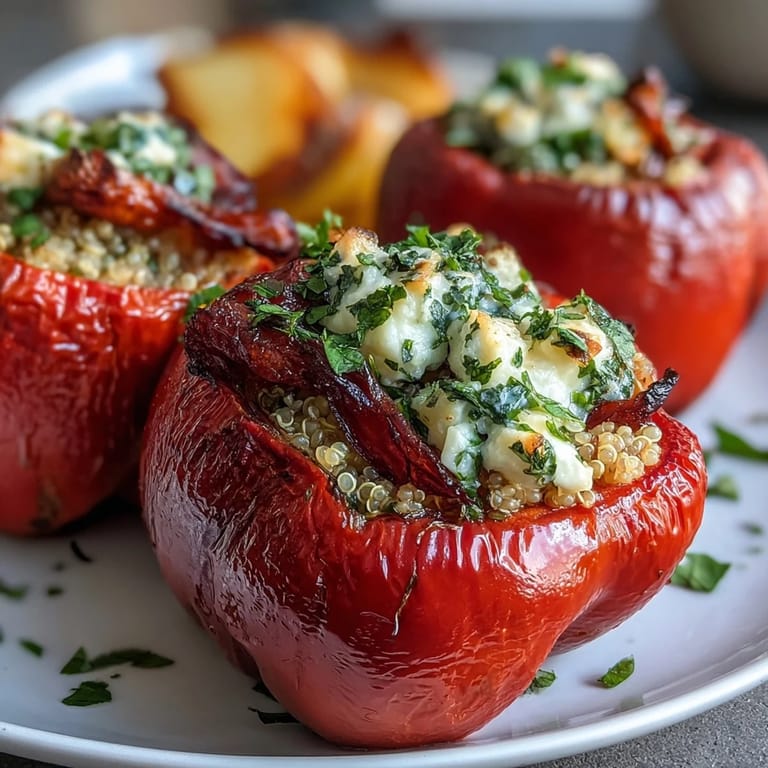
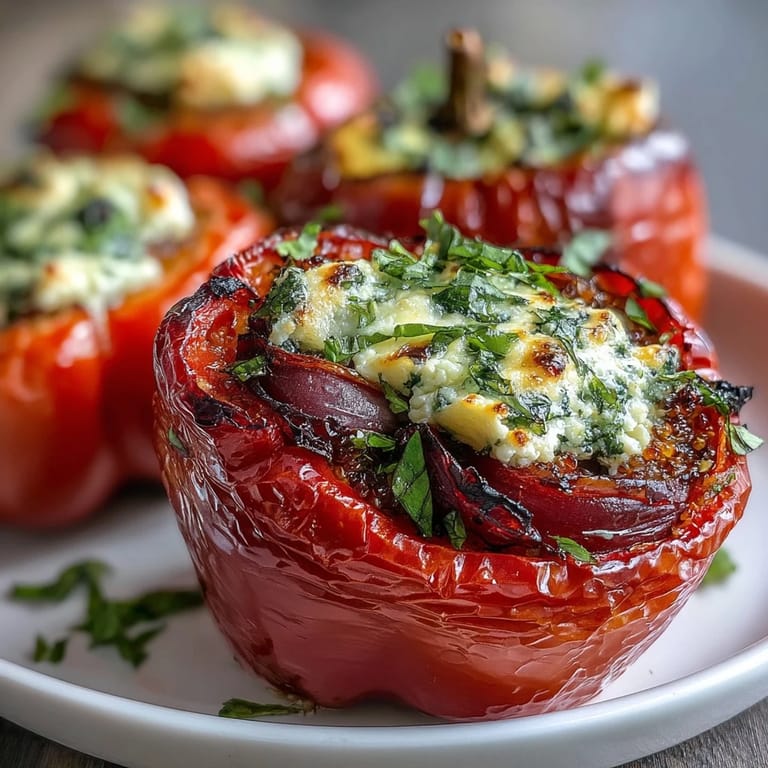
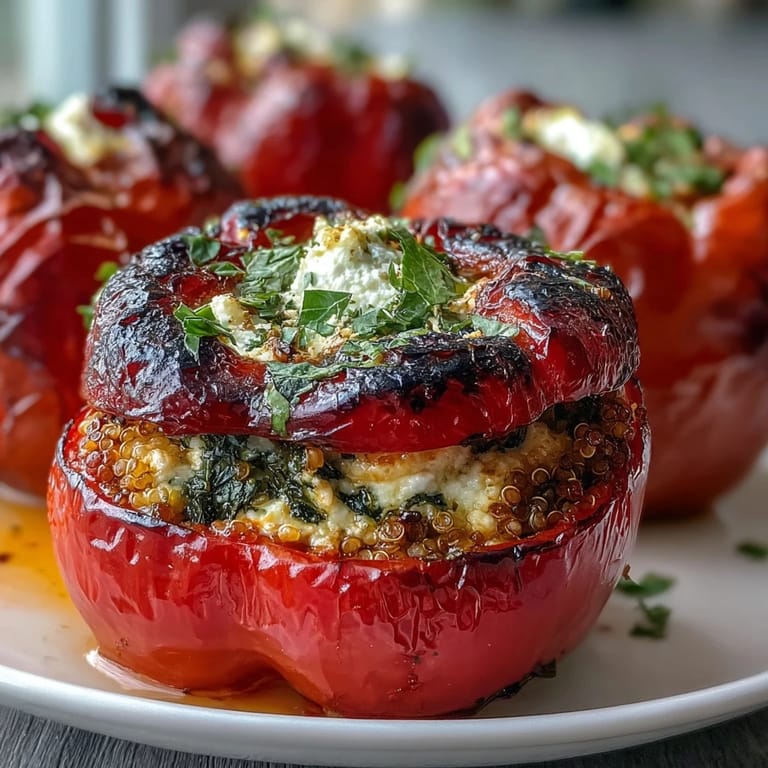
I made this for a small gathering of friends who all seemed to be on different eating paths—one gluten-free, one vegan, one just hungry. I served four perfect peppers standing upright on the table, each one a little vessel of color and flavor, and watched how everyone's face softened as they took the first bite. That meal became the blueprint for what I now cook whenever I want people to feel truly nourished.
Ingredients
- Bell peppers (4 large, any color): Choose peppers that sit flat on the cutting board so they don't tip over in the oven; I learned this after an unfortunate incident involving a runaway pepper and hot filling.
- Quinoa (1 cup, rinsed): Rinsing removes the bitter coating, and measuring by cup rather than weight gives you fluffy grains instead of mushy ones.
- Vegetable broth (2 cups): A good quality broth makes the quinoa taste intentional rather than neutral; I always check that it's low-sodium so the herbs shine.
- Fresh parsley, basil, and mint: These three herbs together create a brightness that dried herbs can't match; don't skip the mint—it adds an unexpected whisper of flavor.
- Cherry tomatoes (1 cup, quartered): Their sweetness balances the earthiness of the quinoa and prevents the filling from tasting one-note.
- Zucchini (1 small, finely diced): Dicing finely matters here because larger pieces stay firm and detract from the creamy texture of the final filling.
- Red onion and garlic: Sautéing these together first builds the aromatic foundation that carries through every bite.
- Feta cheese (1/2 cup, optional): Crumbled feta adds a salty, tangy note that transforms the dish from wholesome to craveable, but leave it out for vegan guests.
- Olive oil, salt, and pepper: Two tablespoons of good olive oil is enough to cook the vegetables without making the filling greasy.
Tired of Takeout? 🥡
Get 10 meals you can make faster than delivery arrives. Seriously.
One email. No spam. Unsubscribe anytime.
Instructions
- Prepare your workspace and oven:
- Preheat your oven to 375°F and lightly grease a baking dish—this small step prevents sticking and makes cleanup effortless. While the oven warms, carefully slice the tops off your peppers and scoop out the seeds and white membranes with a sharp spoon.
- Cook the quinoa:
- Bring vegetable broth to a rolling boil, then add the rinsed quinoa and immediately reduce heat to low; this prevents boiling over. Cover and let it simmer undisturbed for 15 minutes, then fluff gently with a fork and taste a grain—it should be tender with just a hint of that nutty quinoa texture.
- Build layers of flavor:
- Heat olive oil in a large skillet and add the minced garlic and chopped red onion together; this gives them time to become fragrant and slightly soft. After about two minutes, add your diced zucchini and let it cook for four minutes until it loses its firmness, then toss in the cherry tomatoes for just two more minutes—you want them to warm through without collapsing.
- Marry all the components:
- Pour the cooked quinoa into a large mixing bowl and add the warm vegetables straight from the skillet, then scatter in your fresh herbs and seasonings. Fold everything together gently, tasting as you go and adjusting seasoning; this is where the dish comes alive with flavor.
- Fill and arrange:
- Spoon the filling into each pepper cavity, packing it gently so it holds together but not so tightly that it becomes dense. Stand the filled peppers upright in your prepared baking dish, nestling them close so they support each other.
- Bake with patience:
- Cover the baking dish tightly with foil and place it in your preheated oven for 30 minutes; the foil traps steam and softens the peppers beautifully. After 30 minutes, remove the foil and bake for another 10 minutes so the tops can develop a light golden color and the peppers become tender enough to pierce easily with a fork.
- Rest before serving:
- Let the peppers cool for five minutes straight from the oven—this prevents them from being mouth-burningly hot and gives the filling time to set slightly. Serve them warm, perhaps with an extra sprinkle of fresh herbs on top.
 Save to Pinterest
 What struck me most about serving this dish was how it seemed to invite conversation—people lingered at the table longer, asking about flavors and whether I'd remembered the mint intentionally or discovered it by accident. It became the meal I made when I wanted to show care through food without fussing endlessly, which turned out to be a kind of quiet magic.
Why Fresh Herbs Make All the Difference
I once tried making this with only dried oregano and the result tasted flat and forgettable, like something made from a box. The fresh herbs—especially the combination of parsley, basil, and mint—create a complexity that dried herbs simply cannot achieve. They brighten the earthiness of the quinoa and make the whole dish feel alive rather than virtuous.
Customizing Your Filling
One evening I had leftover roasted chickpeas in my fridge and crumbled them into the filling, and suddenly the dish had protein density that made it feel even more satisfying. Another time I added a handful of chopped olives because I was in a Mediterranean mood, and the saltiness perfectly complemented the fresh herbs. The beauty of this recipe is that it's flexible enough to welcome whatever vegetables or proteins you have on hand.
Storage and Serving Suggestions
These peppers keep beautifully in the refrigerator for up to three days, and reheating them gently in a low oven brings back their texture without drying them out. I've found that serving them at room temperature makes them even more flavorful, as the herb oils have time to settle and develop. The leftovers are wonderful tucked into a lunchbox the next day, and they pair wonderfully with a simple green salad and a slice of crusty bread to soak up any filling that escapes.
- For a vegan variation, simply omit the feta or use a plant-based cheese alternative that melts slightly when baked.
- You can prepare the peppers up to four hours ahead and refrigerate them unbaked, then simply extend the baking time by five minutes if they're cold from the fridge.
- Try adding sun-dried tomatoes, chopped artichoke hearts, or pine nuts to the filling for extra texture and complexity.
 Save to Pinterest
 These stuffed peppers taught me that simple ingredients, when treated with attention and care, become something memorable and deeply nourishing. I still make them whenever I want to feed people I love.
Common Recipe Questions
- → How do I cook the quinoa for the filling?
Simmer quinoa in vegetable broth for about 15 minutes until liquid is absorbed, then fluff with a fork before mixing with other ingredients.
- → Can I prepare this dish vegan?
Yes, simply omit the feta cheese or substitute it with a plant-based alternative to keep the dish vegan-friendly.
- → What herbs are used to enhance the flavor?
Fresh parsley, basil, mint, and dried oregano contribute to the aromatic and vibrant flavor profile of the dish.
- → How long should the stuffed peppers be baked?
Bake covered for 30 minutes, then uncovered for an additional 10 minutes until the peppers are tender and tops lightly browned.
- → What are good serving suggestions with this dish?
Pair with a crisp green salad and crusty bread for a complete and satisfying meal.
- → Can leftovers be stored safely?
Store leftovers in the refrigerator for up to 3 days, ensuring they are covered tightly to maintain freshness.