 Save to Pinterest
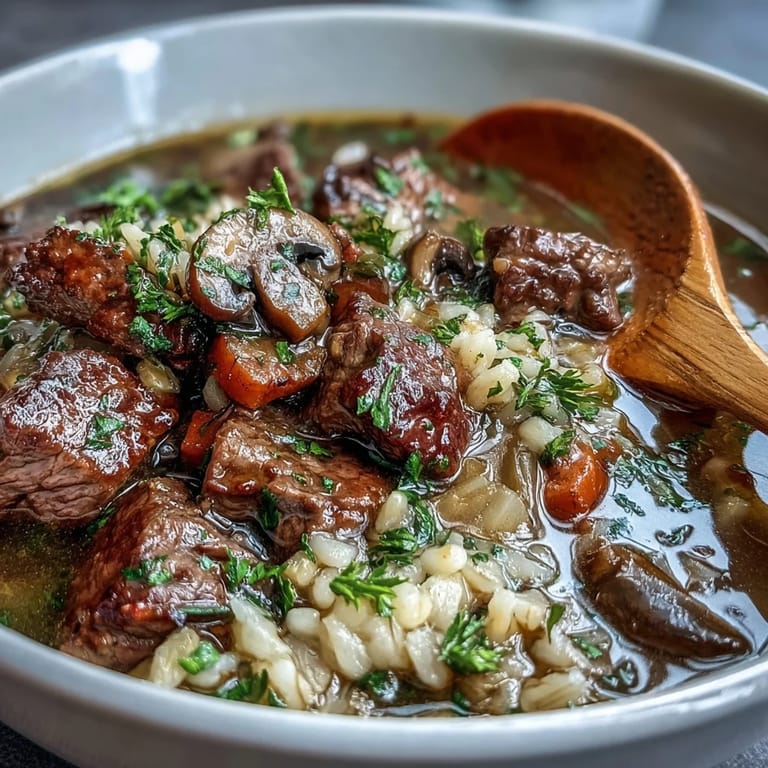
 The autumn breeze rattling our kitchen window always signals soup season in my home. Last October, while flipping through my grandmother's recipe box, I discovered a faded note card for beef and barley soup that instantly transported me to her warm kitchen. I tweaked her recipe by adding mushrooms for earthiness and pancetta for a subtle smokiness that wasn't in the original. The first spoonful of the finished soup nearly brought tears to my eyes—it was home in a bowl.
Last winter, my brother dropped by unexpectedly during a snowstorm, looking half-frozen and completely exhausted from shoveling driveways all day. I happened to have this soup simmering on the stove, and the look on his face when that first steaming spoonful hit his lips told me everything. He ate three bowls without saying a word, then asked if he could take some home. Now he texts me every time the forecast calls for snow, hoping I'll have a pot ready.
Ingredients
- Beef chuck roast: I've learned the hard way that leaner cuts just don't work here—chuck has those beautiful ribbons of fat that slowly melt into the broth, creating richness you simply can't get from sirloin.
- Baby bella mushrooms: Their robust, earthy flavor stands up beautifully to the beef, and they absorb all those wonderful broth flavors like tiny flavor sponges.
- Pancetta: This Italian cured pork adds a subtle depth that regular bacon can't quite match—it's less smoky and more delicately porky.
- Pearl barley: The way this grain plumps up and releases its starchiness helps thicken the soup naturally while adding a delightful chewiness.
- Tomato paste: Just a couple tablespoons transforms the entire flavor profile with a sweet-acidic backbone that balances the richness.
Tired of Takeout? 🥡
Get 10 meals you can make faster than delivery arrives. Seriously.
One email. No spam. Unsubscribe anytime.
Instructions
- Create your flavor foundation:
- Start by crisping that pancetta in a tablespoon of olive oil until it releases its beautiful fat and turns golden brown. The kitchen will fill with an irresistible porky aroma that signals good things are happening.
- Build those beefy layers:
- Season your beef chunks generously, then sear them in batches until they develop that gorgeous brown crust. This isn't just for looks—those browned bits are pure concentrated flavor.
- Vegetable magic:
- The sizzle when your mirepoix hits that hot pot is one of cooking's most satisfying sounds. Let the onions, carrots and celery soften and absorb all those meaty flavors left in the pot.
- Mushroom transformation:
- Watch patiently as the mushrooms first absorb the oil, then slowly release their liquid before eventually browning. This process concentrates their earthy flavor and creates another layer of complexity.
- Bring it all together:
- When everything returns to the pot along with the barley and liquids, you'll notice the aroma shift from separate ingredients to one harmonious scent. That's when you know the magic is beginning.
- The waiting game:
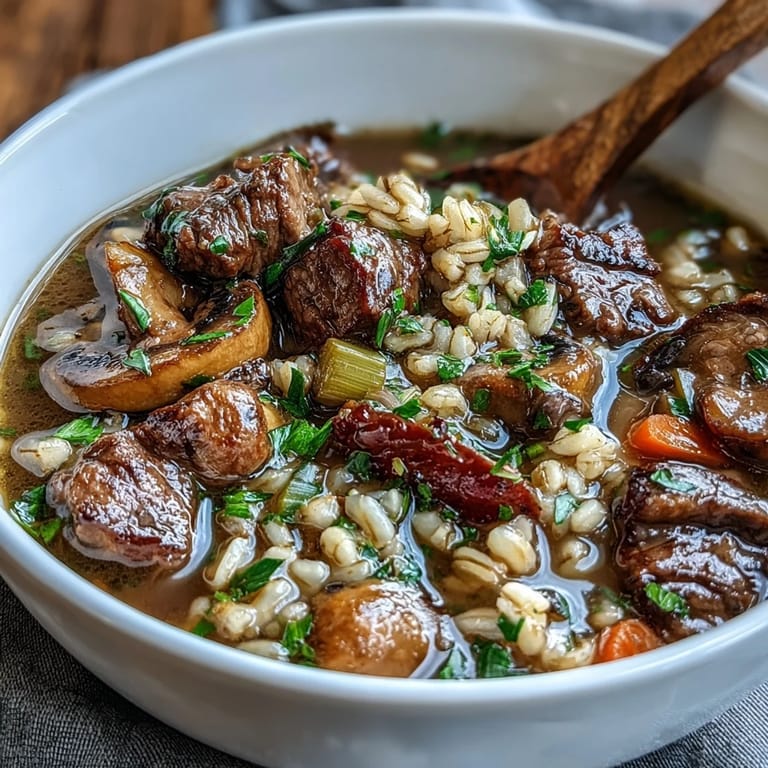
- As the soup simmers, the barley will slowly plump while the beef becomes increasingly tender. Resist the urge to rush this process—good things come to those who wait.
 Save to Pinterest
 My neighbor Sarah, who claimed she couldn't stand barley since a childhood incident involving a mushy soup at summer camp, reluctantly accepted a bowl during our block party last fall. I watched from across the yard as her expression changed from polite acceptance to genuine surprise after her first taste. She later pulled me aside to ask for the recipe, admitting this soup had completely changed her mind about an ingredient she'd avoided for decades.
Make-Ahead Magic
There's something almost alchemical that happens when this soup rests overnight in the refrigerator. The flavors meld and deepen in a way that transforms it from delicious to extraordinary. The barley softens further while absorbing more broth, the beef becomes even more tender, and all those herbal notes distribute themselves throughout. I now intentionally make this soup the day before I plan to serve it, knowing it will reward my patience.
Ingredient Swaps Worth Trying
Some of my most delightful kitchen discoveries happened when necessity forced me to improvise with this recipe. Bacon works beautifully if pancetta isn't available, though it brings a smokier profile. For a gluten-free version, brown rice creates a different but equally satisfying texture, though it requires about 15 minutes less cooking time. And during mushroom season, I've substituted wild mushrooms like chanterelles or porcini with spectacular results—their intense woodland flavor elevates the entire soup to restaurant quality.
Serving Suggestions
How you serve this humble soup can transform it from a casual family dinner to something worthy of guests. I've learned to appreciate the power of thoughtful presentation even with rustic dishes like this one. The contrast between the hearty, robust soup and delicate finishing touches creates a beautiful dining experience.
- A slice of crusty sourdough bread brushed with garlic-infused olive oil makes the perfect edible spoon for capturing every last drop of broth.
- For unexpected brightness, try adding a small dollop of crème fraîche and a sprinkle of lemon zest just before serving.
- If you're feeling indulgent, shave a bit of aged parmesan over the hot soup and watch it slowly melt into the surface.
 Save to Pinterest
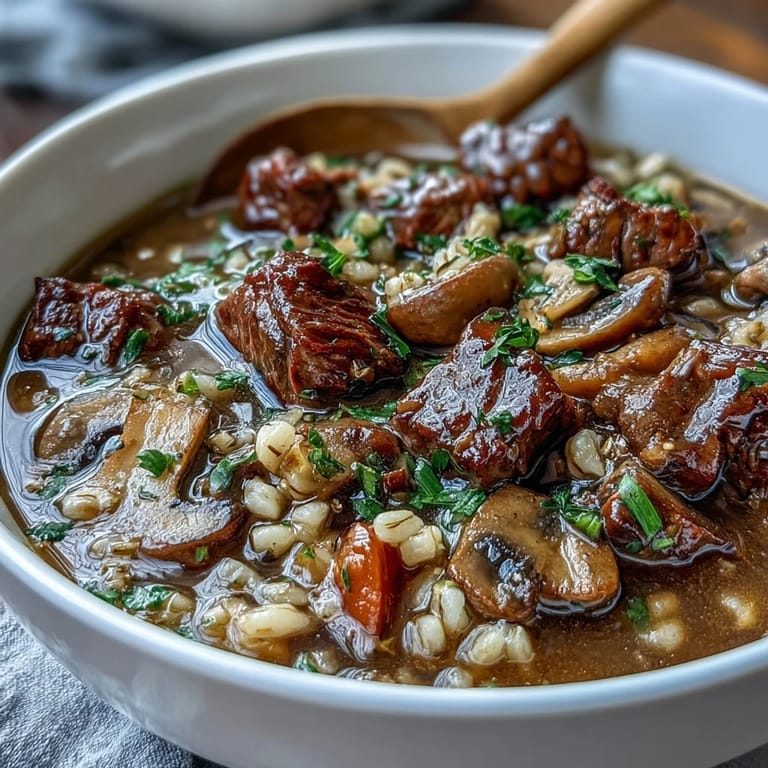
 This soup has become more than just a meal in our home—it's become a tradition, a comfort, and sometimes even a peace offering. Whether you're making it for yourself or sharing with loved ones, I hope it brings you the same warmth and satisfaction it's brought to our table.
Common Recipe Questions
- → Can I make this soup in a slow cooker?
Yes. Brown the beef and pancetta first, then transfer everything to your slow cooker. Cook on low for 6-7 hours or high for 3-4 hours until beef is tender. Add barley during the last hour to prevent overcooking.
- → How should I store leftovers?
Cool completely and refrigerate in airtight containers for up to 4 days. The barley will continue absorbing liquid, so add additional broth when reheating. This soup also freezes well for up to 3 months.
- → What cut of beef works best?
Chuck roast is ideal because it becomes tender during long cooking and adds rich flavor. Stew meat or round steak also work, though avoid lean cuts that may become tough. Always cut into uniform 1/2-inch cubes.
- → Is barley gluten-free?
No, pearl barley contains gluten. For a gluten-free version, substitute with brown rice, quinoa, or wild rice. Adjust cooking time accordingly—rice typically needs 45 minutes while quinoa requires about 20 minutes.
- → Can I use different mushrooms?
Absolutely. Cremini, shiitake, or portobello mushrooms work beautifully. Dried porcini mushrooms rehydrated in hot water before adding will intensify the beefy flavor. Avoid delicate varieties like white button which can become watery.
- → Do I need to rinse barley before cooking?
Rinsing pearl barley removes excess starch and dust, preventing the soup from becoming overly thick. A quick cold-water rinse is sufficient—no soaking required since it cooks directly in the broth.