 Save to Pinterest
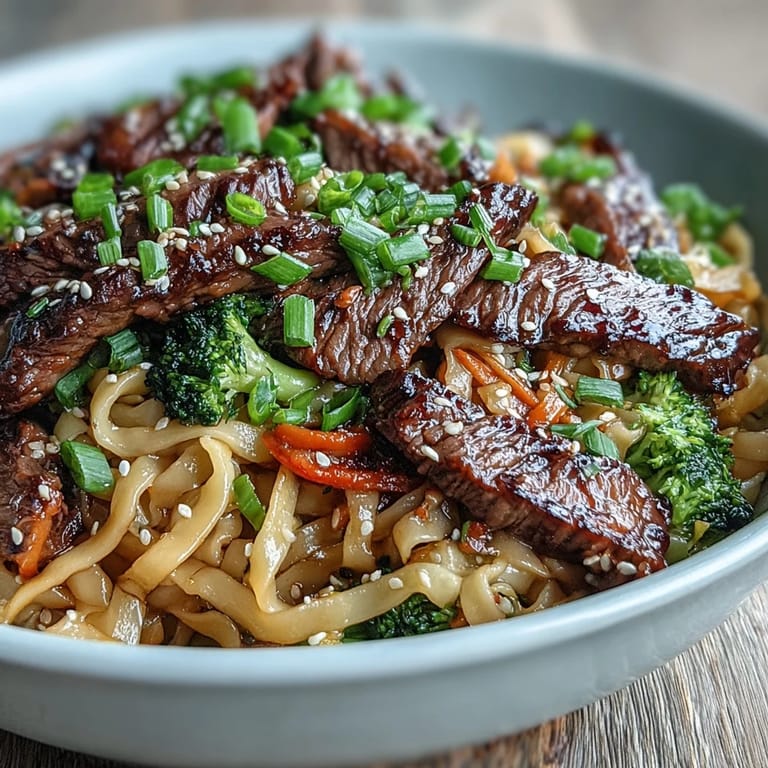
 My neighbor knocked on my door one rainy Tuesday holding a takeout container half full of glossy noodles and beef. She said she'd ordered too much and thought I might want dinner. I reheated it in my skillet, and the smell of garlic and sesame filled my entire apartment. That single bite of tender steak tangled with slippery rice noodles made me want to recreate it immediately. I started testing versions the very next weekend, tweaking the balance of soy and brown sugar until the sauce clung to every strand just right.
I made this for my brother the night before he moved across the country. We sat on my kitchen floor with our bowls because I had already packed the dining chairs. He kept twirling his fork through the noodles and saying he wished he could take a gallon of it on the plane. That moment made me realize food doesn't need to be fancy to feel important. Sometimes it just needs to be warm, easy, and shared with someone you care about.
Ingredients
- Rice noodles: They turn silky and slippery when cooked, soaking up the sauce better than wheat noodles ever could, and they cook in just minutes so you can focus on the skillet.
- Flank steak: Slicing it thin against the grain keeps every bite tender, and it browns fast over high heat without drying out or getting chewy.
- Broccoli florets: They add crunch and soak up the garlicky oil, plus they hold their shape even after a few minutes of stir-frying.
- Bell pepper: Red or yellow peppers bring sweetness and a pop of color that makes the bowl look as good as it tastes.
- Carrot: Julienned thin, it cooks quickly and adds a subtle earthiness that balances the salty-sweet sauce.
- Green onions: A handful of chopped scallions on top adds a fresh, sharp bite right before you dig in.
- Garlic: Minced garlic blooms in hot oil and perfumes the entire dish, so don't skip this or rush it.
- Ginger: Freshly grated ginger gives a warm, spicy brightness that makes the sauce feel alive instead of flat.
- Soy sauce: This is the salty backbone of the sauce, so use a good quality one and taste as you go.
- Brown sugar: It melts into the soy sauce and creates that glossy, slightly sticky coating that clings to everything.
- Sesame oil: Just a tablespoon adds a nutty, toasty aroma that makes the whole bowl smell like a restaurant kitchen.
- Vegetable oil: A neutral oil with a high smoke point lets you sear the beef and vegetables without any burnt flavors.
- Sesame seeds: A sprinkle on top adds a little crunch and makes the dish look polished and intentional.
Tired of Takeout? 🥡
Get 10 meals you can make faster than delivery arrives. Seriously.
One email. No spam. Unsubscribe anytime.
Instructions
- Cook the noodles:
- Boil the rice noodles according to the package directions, then drain them and rinse briefly under cool water to stop them from sticking. Set them aside while you work on the skillet.
- Sear the beef:
- Heat vegetable oil in a large skillet or wok over medium-high heat until it shimmers, then add the thinly sliced flank steak in a single layer and let it brown for 2 to 3 minutes without stirring too much. Remove the beef to a plate and leave the flavorful oil behind.
- Bloom the aromatics:
- Toss the minced garlic and grated ginger into the hot skillet and stir for about 30 seconds until the smell fills your kitchen. Be careful not to let them burn or they'll taste bitter.
- Stir-fry the vegetables:
- Add the broccoli, bell pepper, and julienned carrot to the skillet and stir-fry for about 5 minutes until they're tender but still crisp. The high heat will give them a slight char that adds depth.
- Mix the sauce:
- While the vegetables cook, whisk together the soy sauce, brown sugar, and sesame oil in a small bowl until the sugar dissolves completely. Taste it and adjust if you like it sweeter or saltier.
- Combine beef and sauce:
- Return the seared beef to the skillet and pour the sauce over everything, stirring to coat the beef and vegetables evenly. Let it bubble for a moment so the flavors meld.
- Toss in the noodles:
- Add the cooked rice noodles to the skillet and gently toss everything together using tongs or a spatula until the noodles are evenly coated and heated through, about 2 minutes. Be gentle so the noodles don't break apart.
- Garnish and serve:
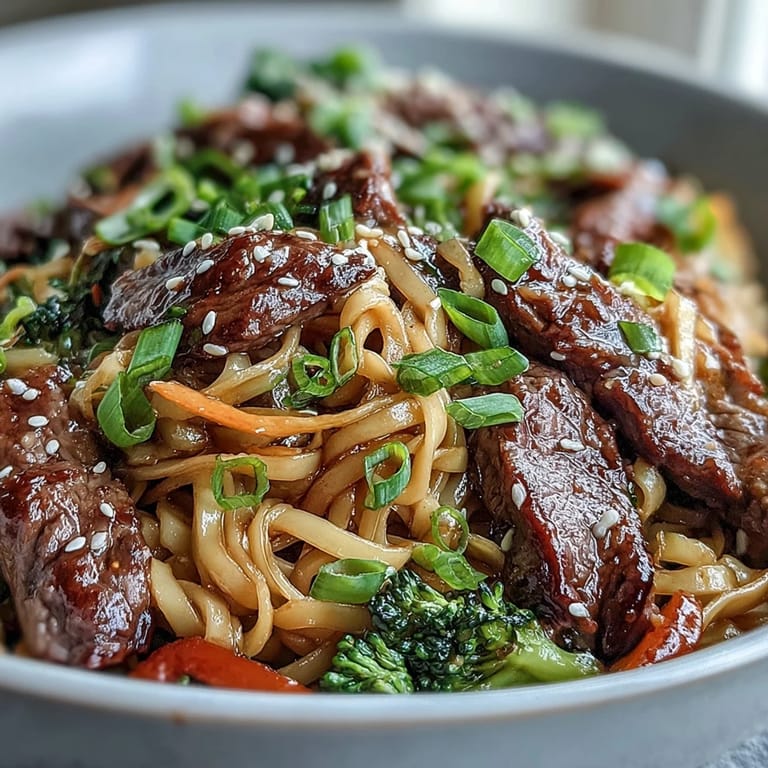
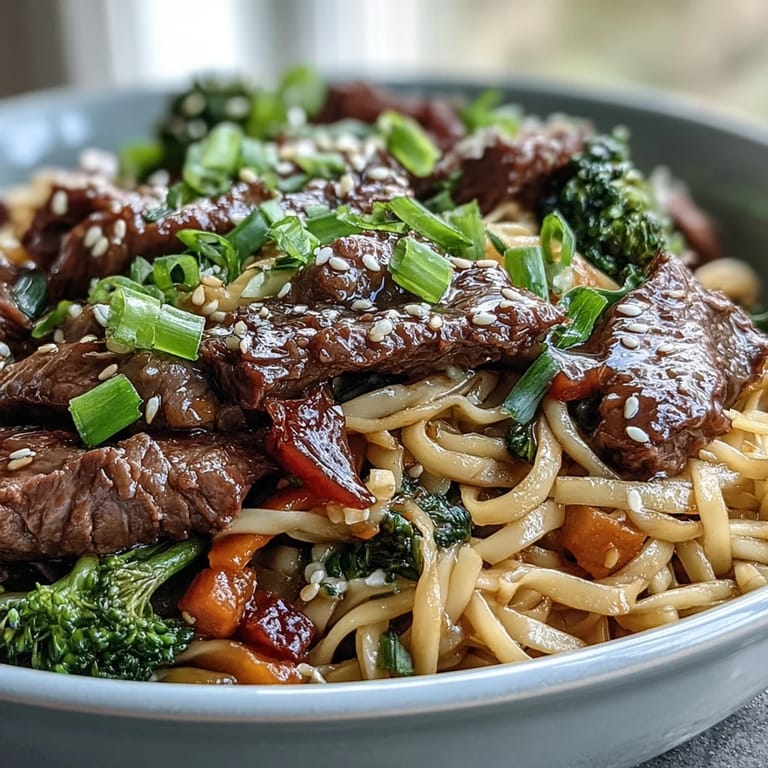
- Divide the noodles into bowls and top each one with chopped green onions and a sprinkle of sesame seeds. Serve immediately while everything is still steaming hot.
 Save to Pinterest
 One night I made this for a friend who was going through a rough week at work. She sat at my counter in silence for the first few bites, then looked up and said it tasted like comfort wrapped in noodles. We ended up talking until midnight, our bowls long empty but still sitting between us. That's when I realized this dish had become more than just dinner. It had become my go-to for showing up when words weren't enough.
Ingredient Swaps That Work
I've made this recipe with chicken thighs when I didn't have steak, and the dark meat stayed juicy and soaked up the sauce beautifully. Tofu works too if you press it well and sear it until golden, giving you crispy edges that hold up in the skillet. Snap peas and zucchini are excellent vegetable substitutes, especially in summer when bell peppers feel too heavy. If you can't find rice noodles, lo mein or even spaghetti will do in a pinch, though the texture won't be quite as silky.
Making It Spicy
The first time I added gochujang to the sauce, I used way too much and my eyes watered with every bite. Now I start with just a teaspoon mixed into the soy sauce and brown sugar, tasting as I go until the heat feels right. Sriracha works too if you want a sharper, vinegar-forward kick instead of the deep fermented heat of gochujang. A pinch of red pepper flakes in the skillet with the garlic and ginger will also do the trick if you want subtle warmth without changing the sauce too much.
Storage and Reheating
Leftovers keep in an airtight container in the fridge for up to three days, though the noodles will absorb more sauce as they sit and become a bit softer. I reheat portions in a skillet over medium heat with a splash of water or extra soy sauce to loosen everything up, stirring gently until warmed through. Microwaving works in a pinch, but the noodles can turn rubbery if you overheat them, so use short intervals and stir between each one.
- Add a drizzle of sesame oil after reheating to bring back that fresh, toasty aroma.
- Toss in a handful of fresh vegetables like spinach or bean sprouts to liven up day-old noodles.
- If the sauce has thickened too much, a tablespoon of water or broth will bring it back to life.
 Save to Pinterest
 This recipe has become my weeknight savior when I want something that tastes like I tried without actually spending an hour in the kitchen. I hope it brings you the same kind of easy comfort it's brought me, whether you're cooking for someone special or just treating yourself to a really good bowl of noodles.
Common Recipe Questions
- → Can I use other types of noodles?
Yes, you can substitute rice noodles with soba, udon, or even spaghetti. Just adjust cooking time according to package instructions.
- → How do I slice the beef properly?
Slice the flank steak thinly against the grain. This breaks up muscle fibers for more tender pieces. Partially freezing the beef for 20 minutes makes slicing easier.
- → Can I make this spicy?
Absolutely. Add sriracha, gochujang, or crushed red pepper flakes to the sauce mixture. Start with one teaspoon and adjust to your preferred heat level.
- → How should I store leftovers?
Store cooled leftovers in an airtight container in the refrigerator for up to 3 days. Reheat gently in a skillet or microwave, adding a splash of water if needed.
- → What vegetables work best?
Broccoli, bell peppers, and carrots provide great texture and color. You can also add snap peas, zucchini, mushrooms, or baby corn based on preference.