 Save to Pinterest
 There's a particular kind of relief that comes from making cold sesame noodles on an afternoon when the kitchen feels too warm and your appetite needs something that tastes like both comfort and brightness. I discovered them by accident, really, while hunting through my pantry for tahini and finding that jar of peanut butter that seemed to call out for something beyond toast. The first time I mixed that creamy, nutty sauce with cold noodles, I understood why this dish appears on tables from Beijing to Brooklyn—it's the kind of food that makes you slow down and actually taste each bite.
I made these for a friend who'd been through a difficult week, and she sat on my back porch eating them straight from the bowl while telling me about finally standing up for herself. The cold noodles seemed almost healing that evening—nourishing without being heavy, interesting without demanding much attention. That's when I realized cold sesame noodles are the kind of dish that gives you permission to pause.
Ingredients
- Wheat noodles or spaghetti (350 g / 12 oz): Any long pasta works here; I've found that slightly thicker noodles hold the sauce better than delicate ones, and rinsing them thoroughly removes excess starch so they won't clump.
- Sesame oil for noodles (1 tbsp): This small amount prevents the cooked noodles from sticking together while they cool, which makes plating later infinitely easier.
- Tahini or Chinese sesame paste (4 tbsp): This is the foundation of your sauce—tahini brings a lighter earthiness, while Chinese sesame paste is richer and more assertive, so choose based on how bold you want the flavors.
- Smooth peanut butter (2 tbsp): This adds creaminess and subtle depth; it softens the intensity of pure sesame and keeps the sauce from feeling one-dimensional.
- Low-sodium soy sauce (3 tbsp): The salt anchor for your dish, and using low-sodium gives you control over the final seasoning rather than being trapped by the sauce's saltiness.
- Rice vinegar (2 tbsp): This brings a gentle acid that brightens everything without the harshness of regular vinegar—it's almost like adding light to the dish.
- Honey or maple syrup (1 tbsp): Just enough sweetness to round out the flavors and balance the salt and acid, creating that addictive quality that makes you reach for more.
- Toasted sesame oil (1 tbsp): The flavor powerhouse; use the darker, more fragrant kind and never cook with it—heat destroys the magic.
- Garlic and ginger (2 cloves and 1 tbsp, both grated): Fresh is non-negotiable here; grating rather than mincing releases their oils more completely, creating a more cohesive sauce.
- Chili oil (1–2 tsp, optional): This is where you decide the dish's personality—skip it for gentle, add more for a lingering warmth that arrives at the end of each bite.
- Cold water (3–5 tbsp): Your secret tool for achieving the right texture; add it gradually while whisking to reach that perfect pourable-but-still-coating consistency.
- Cucumber, julienned (1 medium): The crispness is essential; cut just before serving if you can, as cucumber releases water over time and will soften the texture.
- Carrots, julienned (2 medium): Their sweetness and color brighten the plate, and the thin cuts mean they soften slightly from the noodles' residual warmth without going limp.
- Spring onions, thinly sliced (2): Raw and sharp, they cut through the richness of the sauce and add a fresh onion bite that keeps the dish from feeling heavy.
- Toasted sesame seeds (2 tbsp): These add texture and nutty flavor; buy them already toasted or toast them yourself in a dry pan until fragrant, about 2 minutes.
- Fresh cilantro, chopped (1 handful): The herb that makes this dish feel alive and slightly herbal; if you're someone who finds cilantro soapy, substitute fresh mint or skip it entirely.
- Crushed roasted peanuts (optional): Another texture layer that adds richness and crunch, but omit entirely if you have a peanut allergy.
- Lime wedges (optional): A squeeze of fresh lime juice just before eating lifts the entire dish and adds brightness that's hard to achieve any other way.
Tired of Takeout? 🥡
Get 10 meals you can make faster than delivery arrives. Seriously.
One email. No spam. Unsubscribe anytime.
Instructions
- Cook and cool your noodles:
- Bring a large pot of salted water to a rolling boil and cook your noodles according to the package instructions until they're tender but still have a slight bite. Drain them in a colander and rinse under cold running water, stirring gently with your fingers to help them cool evenly and separate. Toss the cooled noodles with 1 tablespoon of sesame oil in a large bowl—this prevents them from clumping and makes them easier to work with later.
- Build your sauce:
- In a medium bowl, combine the tahini, peanut butter, soy sauce, rice vinegar, honey, toasted sesame oil, grated garlic, and grated ginger with a whisk. This combination will look thick and almost paste-like at first; that's exactly right. Gradually add the cold water a tablespoon at a time, whisking constantly, until you reach a smooth, creamy sauce that falls slowly from your whisk—thick enough to coat the noodles but thin enough to pour, like liquid silk.
- Marry noodles and sauce:
- Pour the cooled sauce over the noodles and toss everything together until every strand is glossy and evenly coated. Use tongs or two forks and lift the noodles from the bottom of the bowl repeatedly to ensure the sauce reaches everywhere. Taste a bite and adjust: more soy sauce for salt, more rice vinegar for brightness, more water if it feels heavy.
- Plate and garnish:
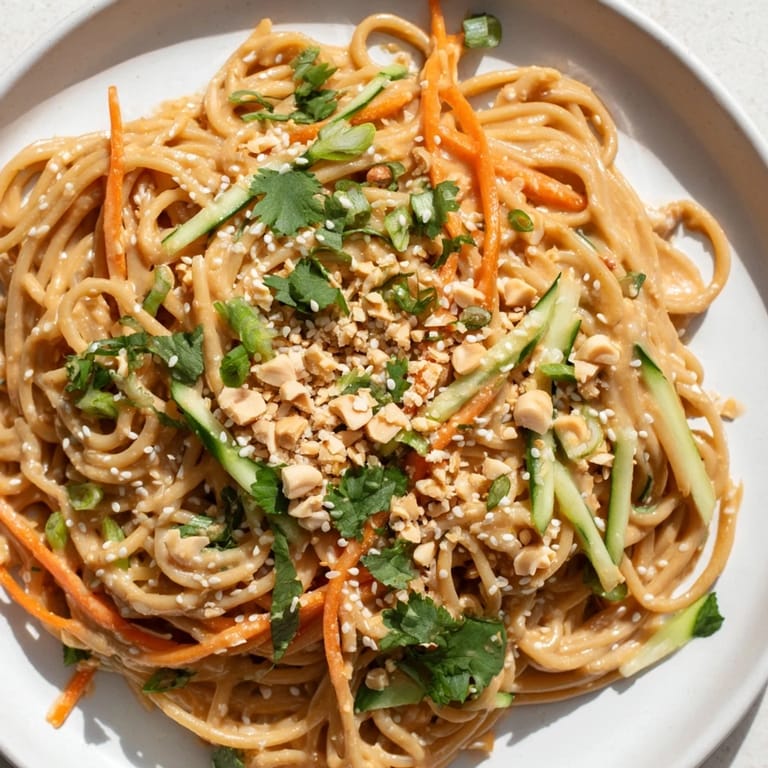
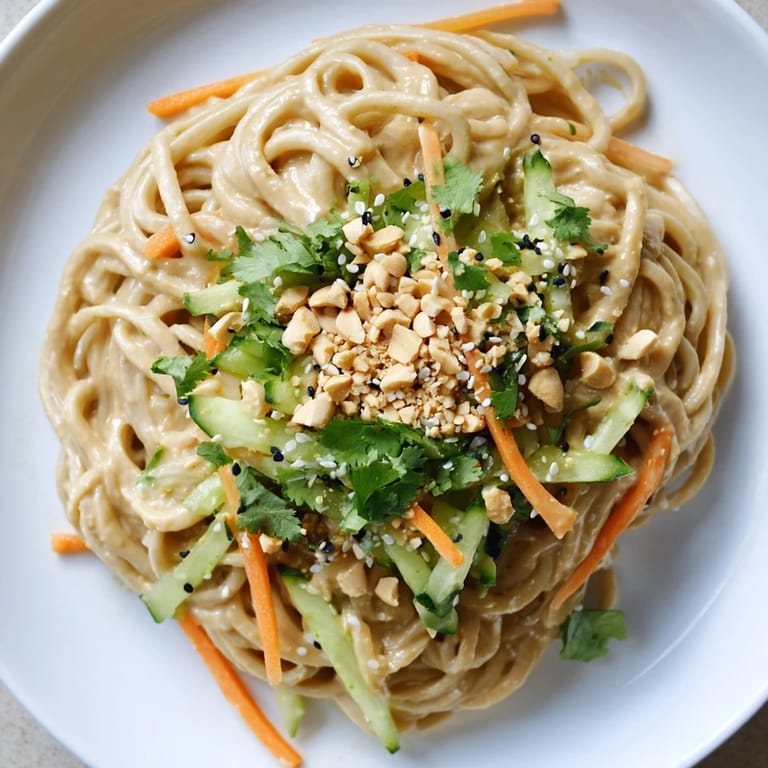
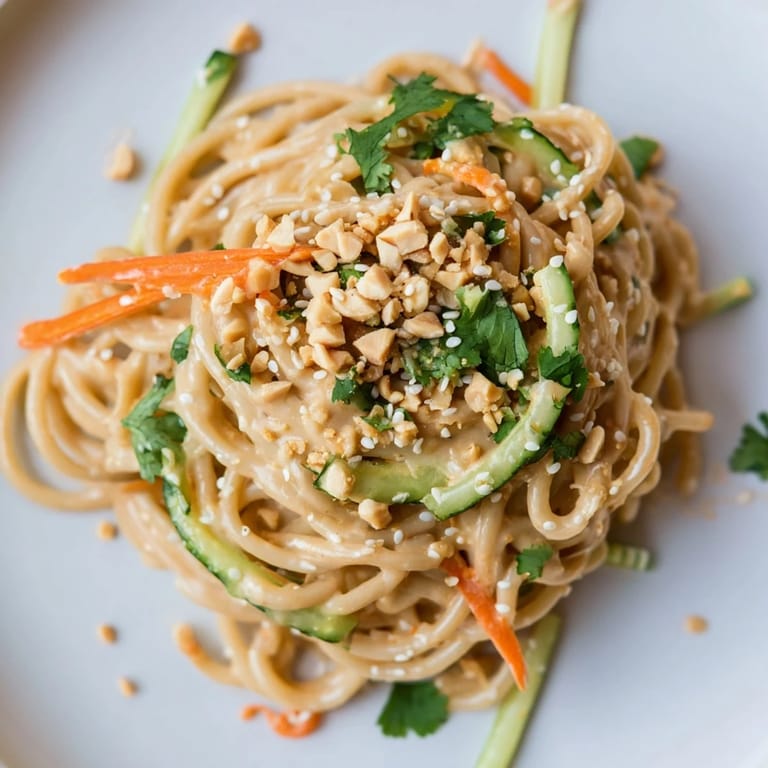
- Divide the dressed noodles among serving bowls and arrange your vegetables and toppings on top in a way that feels intentional—cucumber here, carrots there, spring onions and sesame seeds scattered across. This isn't just presentation; it means each bite has contrast and texture rather than flavors blending into one flat taste.
- Chill and serve:
- If you have time, refrigerate the bowls for 10 to 15 minutes before serving; the cold temperature deepens the flavors and makes the noodles taste more pronounced. Serve with lime wedges on the side and let people squeeze their own, because that final citrus hit is what transforms a good bowl into a memorable one.
 Save to Pinterest
 My partner made these noodles for me during a rainstorm, and something about eating cold, creamy noodles while rain drummed on the windows made the whole meal feel like a small act of care. I think that's what happens when you cook something this simple with attention—it stops being dinner and becomes a moment.
The Sauce Philosophy
This sauce works because it balances three essential elements: richness from the nuts and oil, brightness from the acid and ginger, and depth from the toasted sesame and garlic. If you're someone who always adds too much soy sauce to everything, practice restraint here—the sauce should taste assertive but not salty, with each flavor clear and distinct rather than muddy. I learned this the hard way by over-salting the first batch and then diluting it with water, which just made it taste watered-down instead of balanced.
Making It Your Own
The beauty of cold sesame noodles is how they accommodate additions without losing their essential character. Shredded cooked chicken, silken tofu, or cold shrimp all blend seamlessly into the creamy sauce, and a handful of shredded cabbage or thinly sliced bell peppers adds different texture and flavor layers. Even the noodle choice is flexible—I've made this with ramen, with buckwheat soba, even with rice noodles when that's what I had. The sauce remains the star regardless.
Timing and Storage
This is genuinely a make-ahead dish that improves with a few hours in the refrigerator as flavors meld and deepen, though the vegetables stay crunchiest if added just before eating or stirred in at the last moment. Leftover noodles keep for three days refrigerated, and the sauce keeps even longer; just whisk them back together with a splash of cold water if the sauce has thickened. The kind of meal that makes lunch the next day feel like a small gift to yourself.
- Prep your vegetables earlier in the day and store them separately so everything stays crisp and fresh.
- If serving a crowd, consider making the sauce and noodles ahead but holding off on vegetables until plating time.
- These noodles are forgiving about temperature—they're fine cold from the fridge or at room temperature if you prefer.
 Save to Pinterest
 These noodles have become my answer to the question of what to make when I want something that tastes like care but doesn't demand hours of attention. There's real kindness in a dish that feeds you well, tastes this good, and leaves you with time to actually enjoy it.
Common Recipe Questions
- → What type of noodles work best?
Wheat noodles or spaghetti provide the ideal texture, but gluten-free alternatives can be used for dietary needs.
- → How can I make the sauce creamier?
Gradually adding cold water while whisking helps achieve a smooth, pourable consistency without thinning the flavors.
- → Can I add protein to this dish?
Yes, shredded chicken, tofu, or shrimp are great additions that complement the sesame flavors well.
- → Is there a vegetarian or vegan option?
Using maple syrup instead of honey and choosing vegan noodles make the dish suitable for plant-based diets.
- → How should I store leftovers?
Store chilled in an airtight container and consume within 1-2 days for best freshness and flavor.