 Save to Pinterest
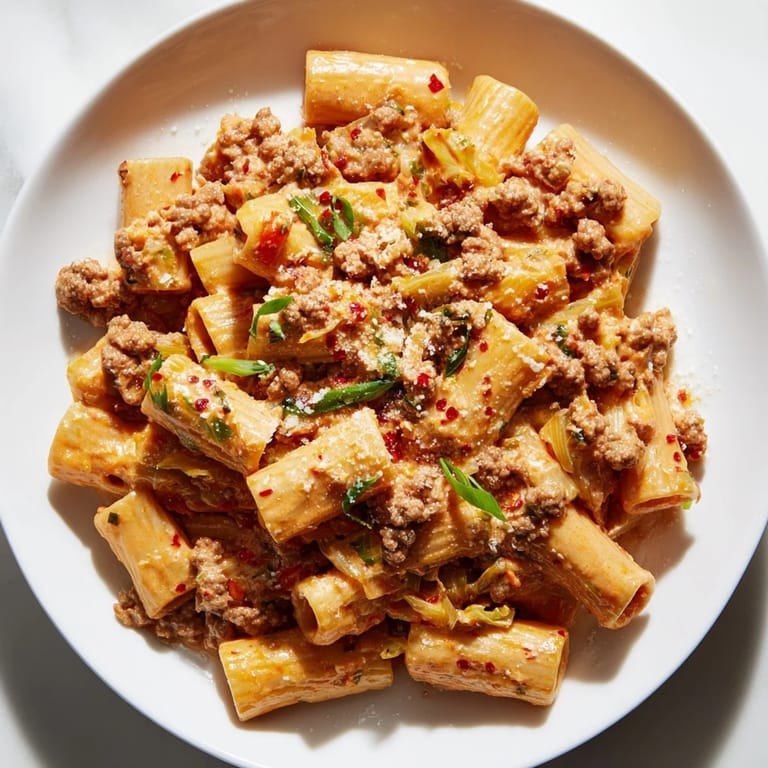
 I discovered this dish by accident on a Tuesday night when I had kimchi in the fridge that needed rescuing and a craving for something warm and creamy. My partner was skeptical about mixing Korean and Italian—until the first bite made them go quiet in that way that only happens when food surprises you. The spicy, tangy fermented cabbage against the silky tomato cream felt like two cuisines finally understanding each other, and suddenly this became one of those meals I find myself making whenever I want to feel both comforted and excited at the same time.
The first time I made this for friends who pride themselves on knowing food, I was nervous about the fusion element. But watching them lift their forks and taste it, then immediately ask for seconds and the recipe—that's when I knew this dish had something special. It's the kind of meal that makes people say yes to another glass of wine and ask you to make it again next month.
Ingredients
- Ground pork (300 g): The backbone here, though beef works just as well if that's what you have, or use half of each for a deeper flavor.
- Onion, carrot, and celery: This holy trinity gets finely chopped because they dissolve into the sauce and create an umami base that makes everything taste richer.
- Napa cabbage kimchi (200 g, plus 2 tbsp juice): Don't skip the juice—it's liquid gold and adds fermented depth that you can't replace.
- Garlic (2 cloves, minced): Mince it small so it melts into the meat instead of leaving chunks.
- Crushed tomatoes (400 g can): The canvas that lets the kimchi and cream shine without competing.
- Heavy cream (120 ml): This is what transforms the ragu from Italian to something entirely its own; it mellows the spice and creates something silky.
- Olive oil (2 tbsp): Use a decent one, but not your most precious—it's cooking, not dressing.
- Soy sauce (1 tbsp): Another layer of umami that ties the whole thing together.
- Rigatoni or penne (350 g): The shape matters here because you want the pasta chunky enough to catch the sauce in every bite.
- Gochugaru (1 tsp, optional): Korean chili flakes for that authentic heat; if you skip it, the kimchi alone will still bring plenty of spice.
- Sugar (1 tsp): A small secret that balances the fermented tang and cuts any bitterness from the tomatoes.
- Salt, pepper, scallions, and Parmesan: The finishing touches that make it taste intentional rather than accidental.
Tired of Takeout? 🥡
Get 10 meals you can make faster than delivery arrives. Seriously.
One email. No spam. Unsubscribe anytime.
Instructions
- Build your base with the soffritto:
- Heat olive oil in a large skillet over medium-high heat and add the chopped onion, carrot, and celery. Let them soften for about five minutes, stirring occasionally—you're not trying to brown them, just make them tender and fragrant. This foundation keeps everything from tasting raw.
- Wake up the garlic:
- Add the minced garlic and let it cook for just one minute until it smells incredible and your kitchen feels alive. Don't walk away or let it burn; that's when garlic turns bitter instead of sweet.
- Brown the meat:
- Add your ground pork and use a wooden spoon to break it into small pieces as it cooks, about six to seven minutes total. You're looking for no pink remaining and a light golden color on the meat.
- Add the kimchi and its juice:
- Stir in the chopped kimchi and the reserved juice, then sauté for three to four minutes. You'll notice the kimchi softens slightly and releases its funk into the pan—that's exactly what you want.
- Build the sauce and let it simmer:
- Pour in the crushed tomatoes, soy sauce, gochugaru if using, sugar, and a pinch of salt and pepper. Lower the heat and let this bubble gently for fifteen to twenty minutes, stirring occasionally, until the sauce thickens and deepens in color.
- Cook the pasta together with the sauce:
- While the ragu simmers, get your pasta water boiling and cook the pasta until al dente—soft but still with a little resistance when you bite it. Drain it, saving about 100 ml of the starchy cooking water for later.
- Finish with cream and bring it together:
- Turn the ragu heat to low and stir in the heavy cream and half the pasta water, mixing until everything turns silky and elegant. Taste and adjust the salt and pepper—this is your moment to make it exactly right.
- Marry the pasta and sauce:
- Add the cooked pasta directly to the ragu and toss everything together gently, adding more pasta water a splash at a time if the sauce seems thick. You want it to coat the pasta like it's meant to be together.
- Plate and finish:
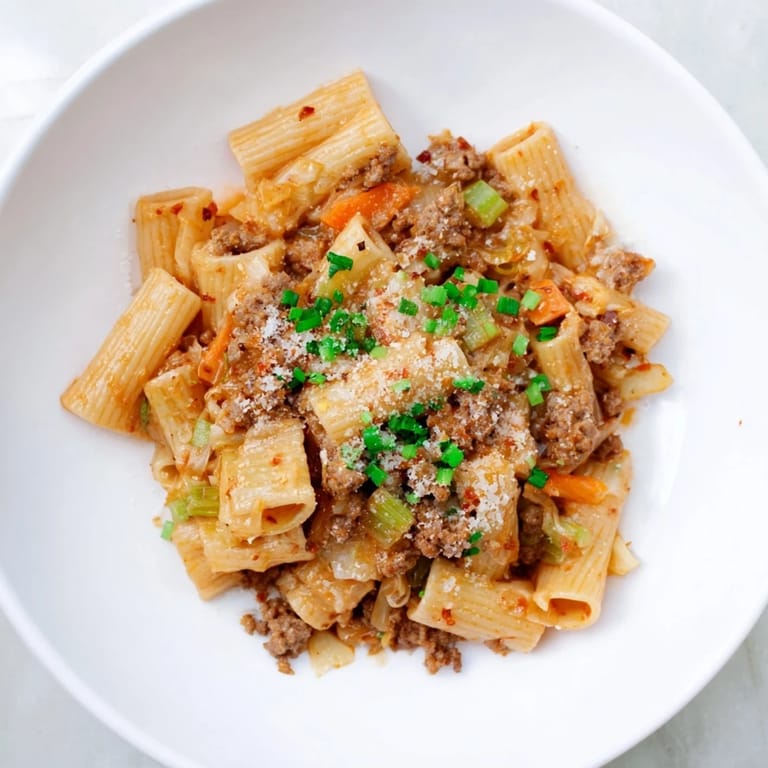
- Serve immediately in warm bowls, scattered with fresh scallions and Parmesan cheese if that's your style. The steam rises, the colors are warm and inviting, and you know you've made something worth talking about.
 Save to Pinterest
 There was a moment when my skeptical partner tasted this for the first time and their eyes went a little wide, like they were tasting something they didn't expect to exist. That's when food stops being sustenance and becomes a small kind of magic—when two traditions collide and create something that feels entirely new yet somehow inevitable.
Why This Fusion Works
The beauty of this dish is that Italian ragu and Korean kimchi speak the same language underneath—they're both about depth, fermentation, and building flavor layer by layer. Where an Italian cook might use wine and time to develop complexity, the kimchi arrives with that already built in, and the cream becomes the translator that lets both voices be heard. It's not confused cooking; it's respectful borrowing from two traditions that actually understand each other quite well.
Playing with Heat and Spice
The gochugaru is optional, but the kimchi alone brings enough spice that you'll feel it on your lips and the back of your tongue. If you like things hot, add the gochugaru without hesitation; if you prefer milder heat, you can cut back on the kimchi quantity or rinse it before chopping to soften its intensity. The beauty of making this at home is that you control the fire, and you can adjust it bite by bite.
Making It Your Own
This recipe is solid as written, but it also loves improvisation and adaptation. Your kitchen isn't a test kitchen—it's your space to learn, adjust, and make things taste the way you want them. Some nights I add a splash of fish sauce for deeper umami, other times I use coconut cream instead of heavy cream to lighten it. Trust your instincts, taste as you go, and remember that the best version of this recipe is the one you'll actually make again.
- If you have leftover ragu, it keeps for three days in the fridge and tastes even better the next day as flavors meld together.
- This dish also works over creamy polenta or spooned into a bowl of rice if you want to skip the pasta.
- For dairy-free, coconut cream or oat cream works beautifully and adds a subtle sweetness that complements the spice.
 Save to Pinterest
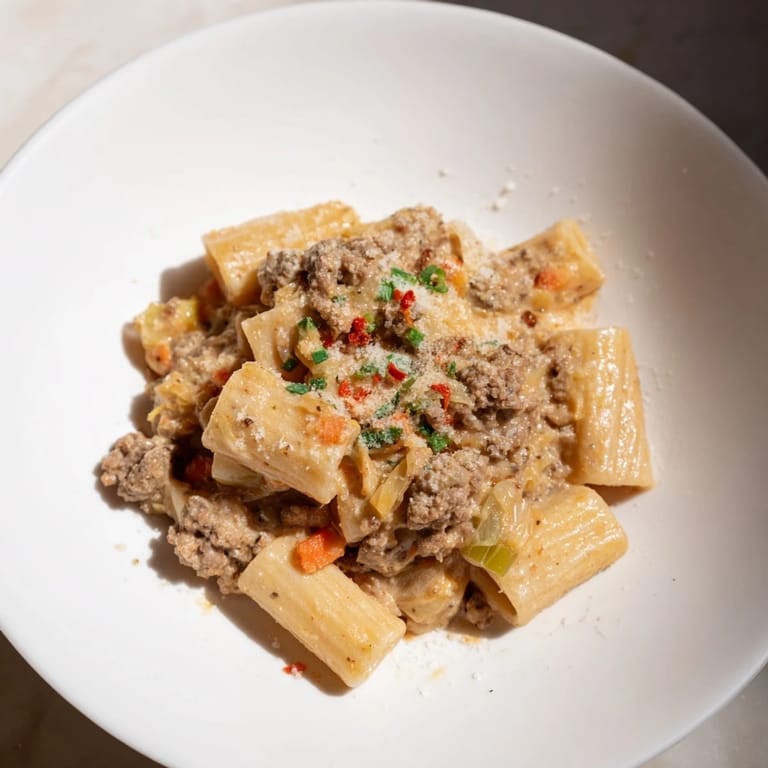
 This meal became a favorite because it tastes like adventure without being stressful to make, and that's the kind of cooking that stays in your rotation. Every time you make it, you're building your own kitchen story—one where different traditions meet on the same plate and somehow just understand each other.
Common Recipe Questions
- → Can I use different meats for the ragu?
Yes, ground beef or a blend of pork and beef works well, offering flexibility in flavor and texture.
- → How can I make this dish dairy-free?
Substitute the heavy cream with unsweetened plant-based cream or coconut cream for a creamy, dairy-free alternative.
- → What level of spice does gochugaru add?
Gochugaru adds a mild to moderate heat with a slightly smoky undertone, enhancing the dish's depth without overpowering it.
- → Is it possible to adjust the recipe for a vegetarian version?
Yes, use plant-based ground meat and omit Parmesan or replace with a vegan cheese alternative for a vegetarian-friendly dish.
- → What pasta types work best for this sauce?
Short pasta shapes like rigatoni or penne are ideal as they hold the sauce well and provide a satisfying bite.
- → How can I balance the flavors if the sauce is too spicy?
Reducing the gochugaru or kimchi quantity can lessen heat, and adding extra cream or a pinch of sugar helps create a mellow, balanced flavor.