 Save to Pinterest
 The first time I made butternut squash soup, my kitchen windows fogged up from the heat of the oven on a particularly frigid October afternoon. I remember standing at the counter, wrestling with that awkwardly shaped squash, determined to master it. The sweet aroma of caramelizing vegetables gradually replaced the chill in the air. What began as a practical way to use up a farmers market impulse buy evolved into a seasonal ritual that signals the true arrival of autumn in our home.
Last November, my neighbor stopped by unexpectedly just as I was pulling the roasted vegetables from the oven. The kitchen smelled so inviting that she ended up staying for dinner, cradling a steaming bowl between her hands as we caught up on life. She called the next day asking for the recipe, saying her teenage son, who allegedly hated all vegetables, had requested she make the orange soup.
Ingredients
- Butternut Squash: Look for one with a matte skin rather than glossy, which usually means its fresher and will have a more concentrated flavor when roasted.
- Yellow Onion: The natural sugars in the onion amplify the squashs sweetness when they caramelize together in the oven.
- Garlic Cloves: Roasting them whole mellows their pungency while infusing the soup with a gentle warmth that commercial garlic powder simply cant replicate.
- Nutmeg: Just that half teaspoon transforms this from simple squash soup to something that makes people close their eyes on the first spoonful.
- Vegetable Broth: I once used water in an emergency and learned that good broth is non-negotiable for depth of flavor.
Tired of Takeout? 🥡
Get 10 meals you can make faster than delivery arrives. Seriously.
One email. No spam. Unsubscribe anytime.
Instructions
- Prep your squash:
- Peel that stubborn butternut with a sharp vegetable peeler, working from top to bottom. You might feel like youre wrestling with it at first, but once you get through that tough outer skin, the bright orange flesh is your reward.
- Season before roasting:
- Spread your vegetables in a single layer, giving them plenty of breathing room so they roast rather than steam. The sizzle youll hear about 10 minutes in is the sound of flavor developing.
- Watch for golden edges:
- The vegetables are ready when the edges of the squash pieces turn a deep golden brown and the kitchen smells like toasted nuts. This caramelization is your flavor foundation, so dont rush this step.
- Blend with patience:
- Start your blender on low and gradually increase speed to avoid hot soup explosions. The transformation from chunky mixture to silky soup happens suddenly, almost magically.
- Taste and adjust:
- The soup will taste slightly different depending on the sweetness of your particular squash. Let your tongue guide you, adding perhaps a squeeze of lemon if its too sweet or a drizzle of maple syrup if its not sweet enough.
 Save to Pinterest
 One particularly hectic December, I made a double batch of this soup and froze individual portions. On an evening when I returned home exhausted and chilled to the bone, finding that golden soup waiting in my freezer felt like a gift from my past self. I sat by the window watching snow fall, spoon in hand, suddenly aware that comfort food earned its name for exactly this feeling of being cared for, even if youre the one who did the caring.
Garnishing Your Soup
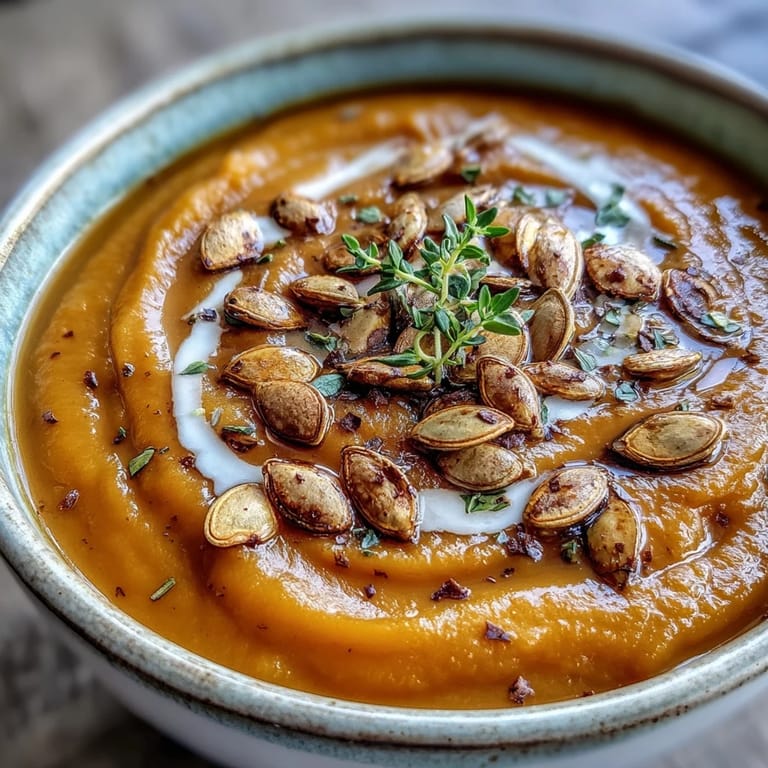
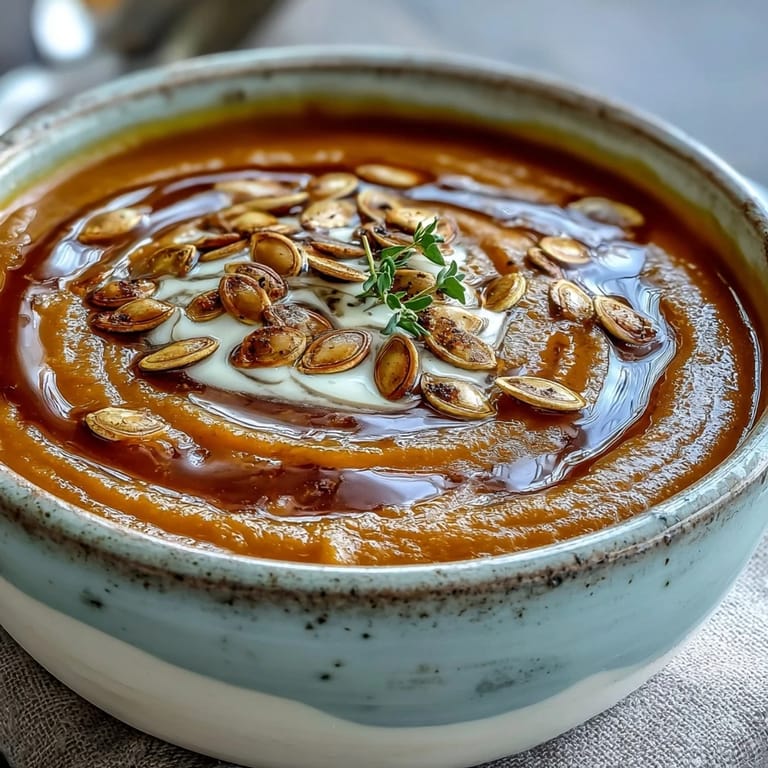
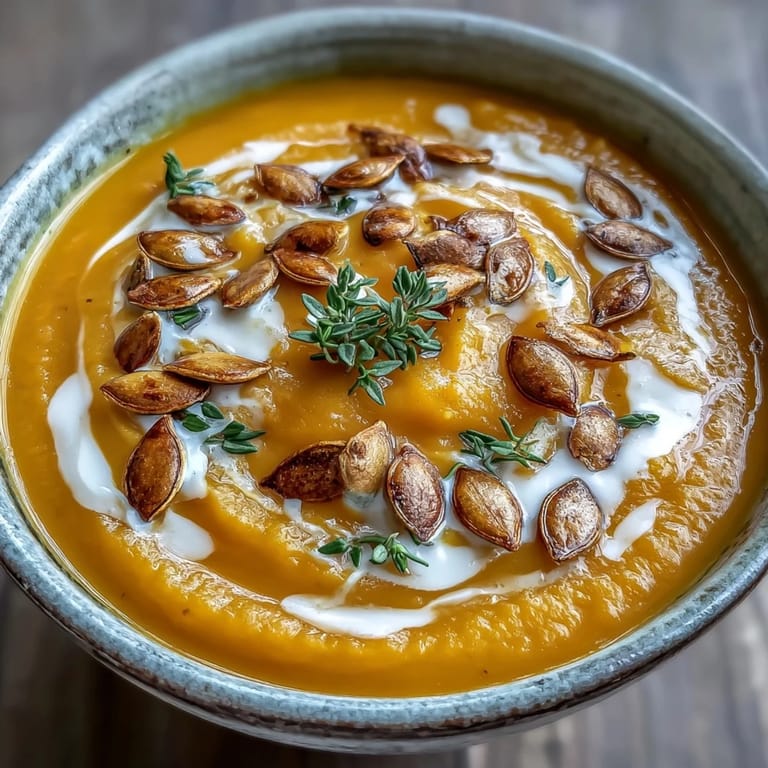
The simple act of adding garnishes transforms this humble soup into something that feels restaurant-worthy. A swirl of cream creates beautiful patterns that break and blend with each spoonful. Toasted pumpkin seeds add a necessary textural contrast, their slight crunch highlighting the velvety smoothness of the soup. Fresh thyme leaves bring a subtle earthy brightness that cuts through the richness.
Serving Suggestions
Theres something about the ritual of serving this soup that elevates the experience. I like to warm the bowls first by filling them with hot water for a minute before drying and filling with soup. This small step keeps the soup hot longer, allowing everyone to savor each spoonful without rushing. A simple grilled cheese sandwich with sharp cheddar on sourdough makes this soup a complete meal, the crisp sandwich edges perfect for dipping into the creamy soup.
Storage and Reheating
This soup develops a deeper, more complex flavor profile after spending a night in the refrigerator, as if the ingredients need time to fully introduce themselves to one another. When reheating, do it gently over medium-low heat, stirring occasionally to prevent the bottom from scorching. A fresh garnish on reheated soup makes it feel brand new again, a trick I learned after serving leftovers to guests who had no idea they werent getting freshly made soup.
- Let the soup cool completely before transferring to airtight containers for refrigerating or freezing.
- For freezing, leave about an inch of headspace in your container as the soup will expand slightly when frozen.
- Write the date on your container if freezing, though I doubt it will stay there long enough to be forgotten.
 Save to Pinterest
 This butternut squash soup has become more than just a recipe in my collection, its a seasonal milestone marking the transition to cooler days and slower rhythms. I hope it brings the same warmth and comfort to your table as it has to mine.
Common Recipe Questions
- → Can I freeze this soup?
Yes, this soup freezes beautifully. Allow to cool completely, then store in airtight containers for up to 3 months. Thaw overnight in refrigerator before reheating gently on stovetop.
- → What's the best way to blend?
An immersion blender works perfectly directly in the pot. For ultra-smooth results, use a countertop blender in batches, removing the center cap to vent steam. Blend until completely silky.
- → Can I make it ahead?
This soup actually tastes better the next day as flavors develop. Make up to 3 days ahead, refrigerate, and reheat slowly. Add garnishes just before serving for best texture.
- → How do I pick ripe squash?
Choose butternut squash with matte, tan skin—avoid glossy or green patches. Should feel heavy for size and have firm, unblemished skin. Store in cool, dark place for weeks.
- → What adds more flavor?
Roast vegetables until deeply caramelized for maximum depth. Add a splash of apple cider vinegar or lemon juice before serving to brighten flavors. Fresh sage or rosemary during roasting also works beautifully.