 Save to Pinterest
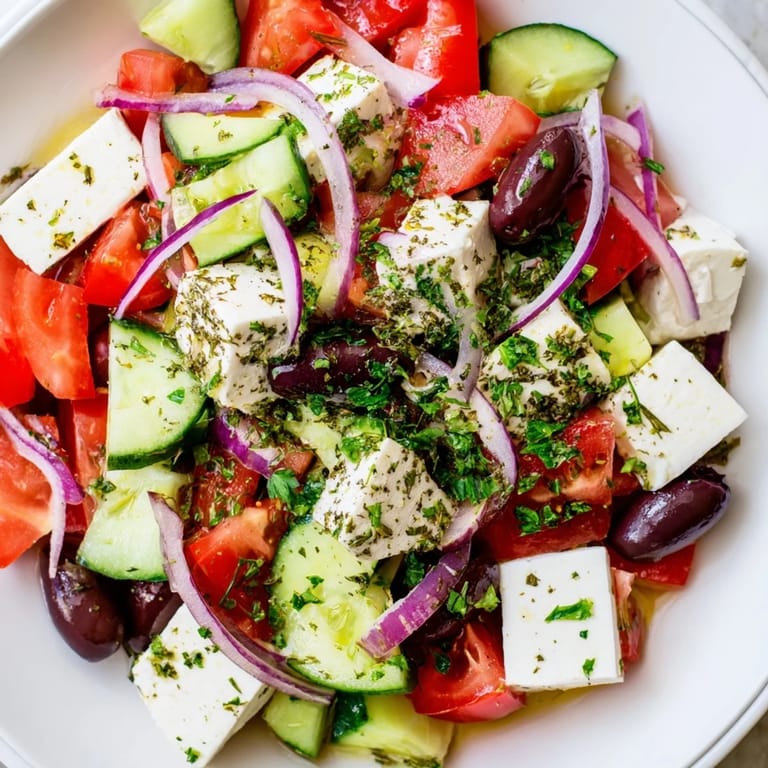
 There's something about mid-summer heat that makes you crave a salad like this—one that tastes like you've just wandered through a sun-baked Greek village market. I discovered this particular combination on a sweltering afternoon when the last thing I wanted was anything warm, and my fridge held exactly these ingredients: tomatoes from the farmer's stand, some feta I'd been meaning to use, and a bottle of good olive oil. Twenty minutes later, I had something that felt like a small vacation in a bowl.
I made this for a potluck once where everyone brought overly complicated dishes, and somehow the simplest thing on the table—this salad—got finished first. People kept coming back for another spoonful, drawn to how the crisp vegetables and creamy cheese played against each other. That taught me something about the power of not overthinking things.
Ingredients
- Ripe tomatoes: The most important ingredient, honestly—seek out ones that smell sweet and give slightly when you press them, because mealy supermarket tomatoes will derail the whole thing.
- Cucumber: A crisp, firm one keeps the salad from getting soggy; if you find a thinner-skinned variety, you can leave the skin on for visual appeal.
- Red onion: The sharp bite cuts through the richness of feta and mellows slightly as the salad sits, which is why thin slices matter.
- Feta cheese: Use real feta if you can; the briny, crumbly kind that comes in brine tastes nothing like blocks of feta-flavored rubber.
- Kalamata olives: These dark, meaty olives have a depth that green ones don't quite match—pitting them yourself takes five extra minutes but means no surprises when eating.
- Extra virgin olive oil: This is where you should splurge; cheap oil tastes thin and flat, but good oil becomes a main character in the dressing.
- Red wine vinegar: The acidity brightens everything without overpowering the delicate vegetables.
- Dried oregano: Mediterranean in a pinch—it perfumes the dressing with warmth and helps tie all the disparate ingredients together.
Tired of Takeout? 🥡
Get 10 meals you can make faster than delivery arrives. Seriously.
One email. No spam. Unsubscribe anytime.
Instructions
- Gather and prepare:
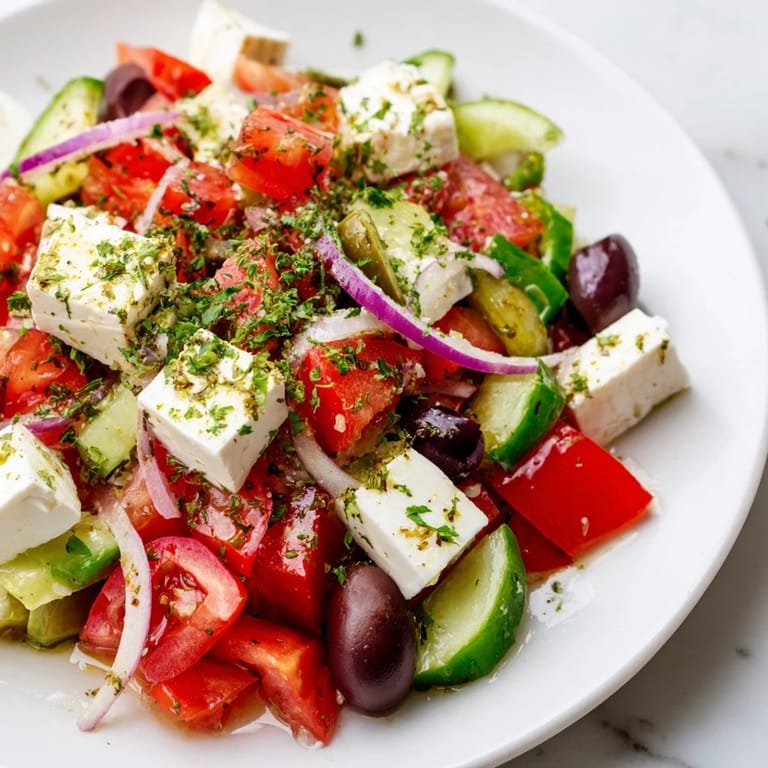
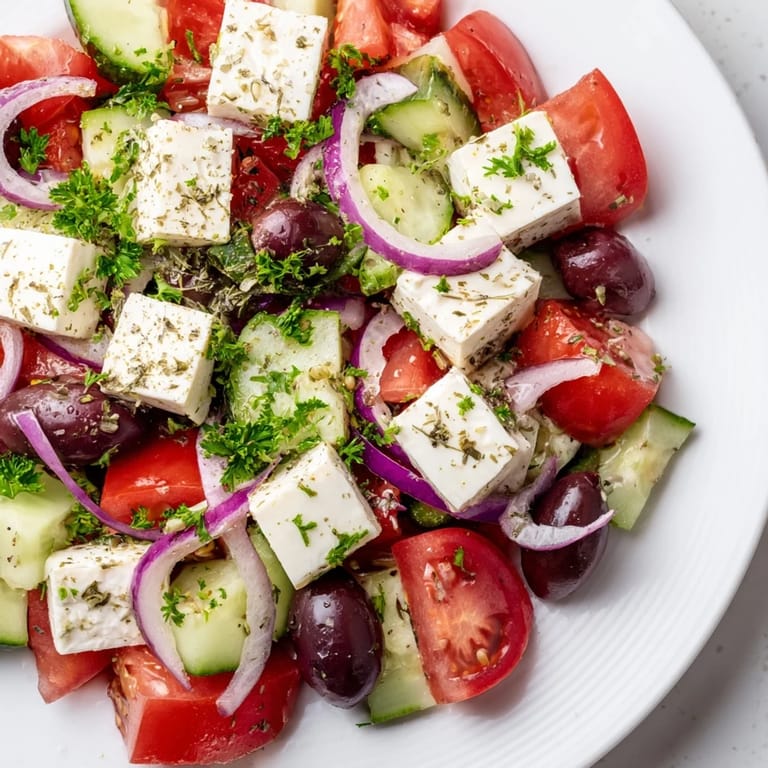
- Dice your tomatoes and cucumber into roughly the same size—uneven pieces make the salad feel careless. Slice the red onion thin enough that light passes through it, and halve the olives.
- Build the foundation:
- Toss the tomatoes, cucumber, onion, and olives in your largest bowl first, letting them mingle before the cheese arrives. This helps the vegetables release some liquid and start mingling.
- Handle the feta gently:
- Crumble or cube the feta and scatter it over the vegetables without stirring—you want irregular pieces that won't disappear into dressing soup.
- Make the dressing:
- In a small bowl, whisk together olive oil, vinegar, oregano, salt, and pepper until the oil and vinegar stop separating and the herbs distribute evenly. Taste it straight—it should be tangy and herbaceous, with the oil carrying the flavor.
- Bring it together:
- Pour the dressing over everything and toss with restraint, using two spoons or your hands to fold everything together without crushing the cheese or vegetables. Serve right away while the textures are distinct, or let it sit for an hour if you prefer flavors to mellow and deepen.
 Save to Pinterest
 I've served this salad at nearly every summer gathering for the past few years, and it's become the dish people request when they need something that feels fresh and nourishing without being heavy. There's a quiet confidence in making something this straightforward—you're not hiding behind technique or complexity, just trusting that good ingredients and a light hand will do the work.
Variations Worth Trying
Once you've made this basic version, you'll start seeing possibilities everywhere. Add thin slices of bell pepper (any color) for sweetness, or toss in capers if you want an extra briny punch. Some people swear by adding a handful of chickpeas for protein and heartiness, while others crumble in some crushed walnuts for texture contrast. I've also made versions with roasted red peppers from a jar, adding them just before serving so they don't turn the whole salad pink.
When to Make This
This salad is at its best during tomato season—late summer into early fall—when tomatoes taste like themselves and not like watery disappointment. That said, I've made credible versions in winter using the best hothouse tomatoes I can find, and it's still restorative. It works as a light lunch, a side dish for grilled fish or chicken, or even the main event at a warm-weather gathering.
Serving Suggestions
Pair this with crusty bread to soak up the dressing, or serve it alongside grilled lamb, fish, or vegetables for a complete meal. It tastes even better alongside a chilled white wine—Sauvignon Blanc, Greek Assyrtiko, or a crisp rosé all feel right.
- For a main course, scatter cooked chickpeas, white beans, or grilled chicken over the top.
- Make a double batch and eat the leftovers straight from the fridge the next morning, before the textures get too soft.
- Bring it to a picnic in a container with the dressing separate, then toss just before serving to keep everything from getting soggy.
 Save to Pinterest
 This salad reminds me why I cook: sometimes the best meals aren't about impressing anyone, just about honoring good ingredients and letting them taste like themselves. It's the kind of dish that tastes like summer and hospitality and good sense all at once.
Common Recipe Questions
- → What vegetables are used in this Mediterranean dish?
The dish includes diced ripe tomatoes, cucumber, and thinly sliced red onion.
- → Can I substitute the feta cheese for a non-dairy option?
Yes, vegan feta alternatives can be used to maintain the creamy texture without dairy.
- → How should the olives be prepared?
Kalamata olives are pitted and halved before being added for balanced flavor and ease of eating.
- → What dressing complements this salad best?
A simple dressing made with extra virgin olive oil, red wine vinegar, dried oregano, salt, and pepper highlights the salad's fresh flavors.
- → Are there any suggested garnishes to enhance the dish?
Fresh chopped parsley or mint can be added as garnish to boost aromatic appeal and freshness.
- → What dish pairings go well with this Mediterranean salad?
It pairs wonderfully with grilled meats, fish, or crusty bread and complements a chilled Sauvignon Blanc.