 Save to Pinterest
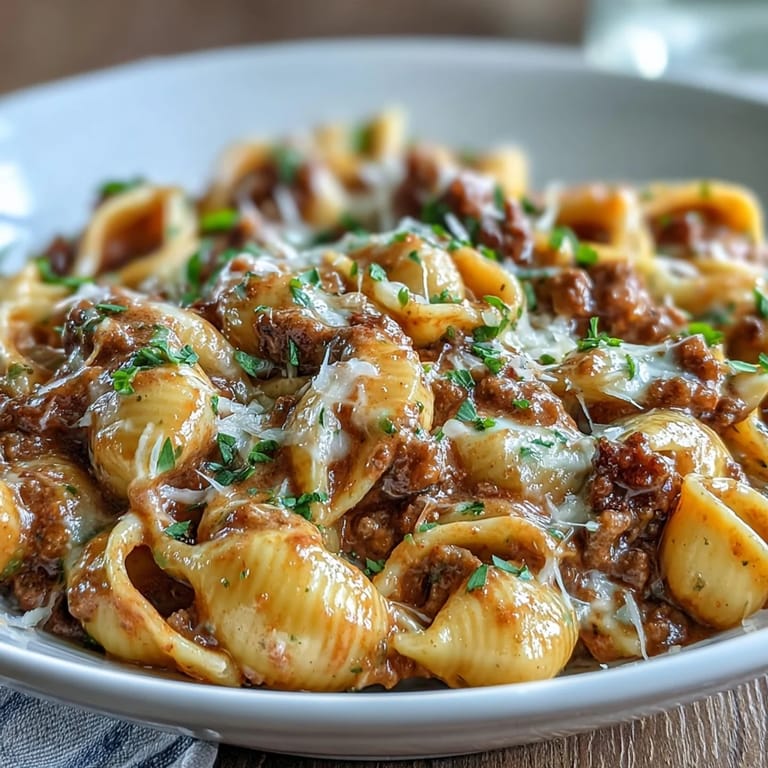
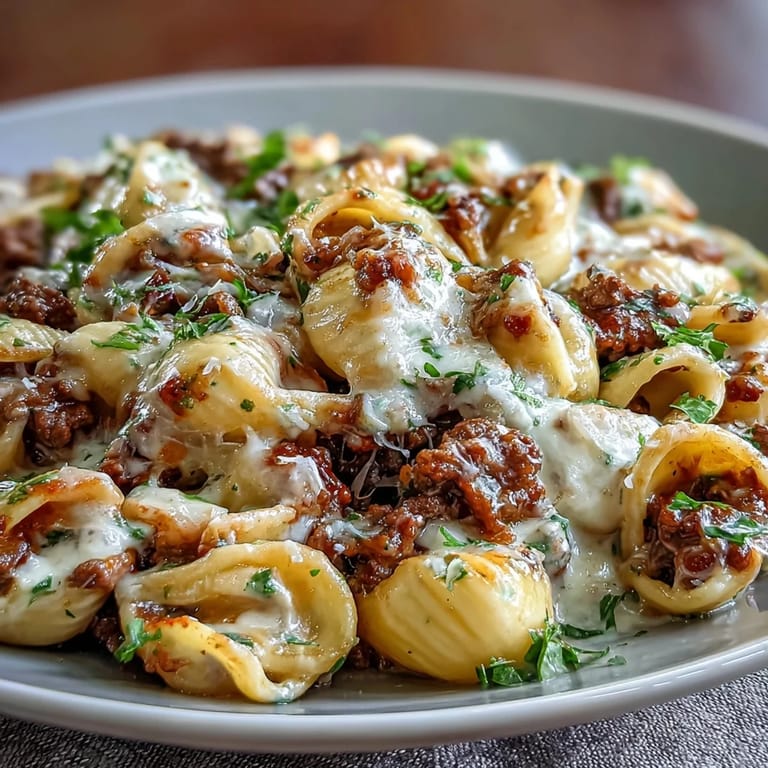
 There's something almost magical about the sound of ground beef hitting a hot skillet on a Tuesday night when you've got maybe thirty minutes before everyone's hungry and you haven't even thought about dinner yet. This one-pot creamy beef and shells became my answer to those moments—it's the kind of dish that fills your kitchen with the smell of caramelizing meat and garlic while you're still standing there in your work clothes, and by the time the pasta has softened into that creamy tomato sauce, you've already won the evening. No pile of dishes waiting, no complicated steps, just a single pot that handles everything.
I made this for my neighbor last winter when she mentioned being overwhelmed with a new job, and I watched her face actually soften when she took that first bite—not because it was fancy, but because it tasted like someone cared enough to make something warm and substantial. She came back the next week asking for the recipe, and I realized this wasn't just comfort food, it was the kind of dish that reminds people they're not alone in the chaos.
Ingredients
- Ground beef (1 lb, 80/20 blend): The higher fat content keeps the meat tender and flavorful as it cooks down—don't reach for the leanest option or you'll end up with something that tastes dry and sad.
- Yellow onion (1 small, finely chopped): Finely chopping matters here because the pieces disappear into the sauce and release their sweetness gradually, building flavor from the start.
- Garlic (2 cloves, minced): Fresh is non-negotiable—jarred garlic tastes tired and won't give you that pungent, alive quality that transforms the entire dish.
- Medium pasta shells (8 oz, uncooked): Shells hold onto the creamy sauce like little edible spoons, which is why this shape works better than penne or rigatoni for this particular dish.
- Beef broth (2 cups): Use good quality broth where the first ingredient is actually beef, not salt and water—the difference shows in the finished sauce.
- Crushed tomatoes (1 can, 14 oz): Canned crushed tomatoes are already cooked, so they integrate faster than fresh and create a more uniform sauce consistency.
- Heavy cream and whole milk (1/2 cup each): The combination gives you richness without being heavy enough to feel like you need a nap afterward.
- Cheddar and Parmesan cheeses (1 cup plus 1/2 cup): Cheddar provides sharp flavor and creamy texture while Parmesan adds that salty, umami punch that makes people ask for seconds.
- Italian seasoning, paprika, salt, and black pepper: These seasonings are your baseline—taste as you go because the tomatoes and cheese will keep developing flavor as they warm.
Tired of Takeout? 🥡
Get 10 meals you can make faster than delivery arrives. Seriously.
One email. No spam. Unsubscribe anytime.
Instructions
- Brown the beef and build your base:
- Heat your pot over medium-high until it's genuinely hot, then add the ground beef and let it sit undisturbed for a minute before you start breaking it up—this creates those flavorful browned bits instead of just steamed meat. You'll know it's done when there's no pink left and the fat has rendered into the pan.
- Soften the aromatics:
- Add the chopped onion and listen for that gentle sizzle—that's when you know the heat is right. Stir it around for a couple minutes until the pieces turn translucent and smell sweet, then add the garlic and count to thirty before moving on.
- Combine everything and let it marry:
- Add the dry pasta shells straight in along with the broth, crushed tomatoes, and all your seasonings, stirring until the pasta is submerged and nothing is stuck to the bottom of the pot. The pasta will start absorbing the liquid immediately, so keep an eye on it.
- Simmer until the pasta is tender:
- Once it reaches a gentle boil, drop the heat to medium-low, cover it, and let it bubble away for 12 to 14 minutes, stirring occasionally so nothing sticks. You're waiting for that moment when the pasta is soft enough to bite through easily but the sauce still coats it instead of being watery.
- Create the creamy finish:
- Pour in the heavy cream and milk, stir it through, and let it simmer uncovered for a couple minutes—you'll watch the sauce thicken and turn a beautiful pale orange color as it reduces slightly. This is when your kitchen starts smelling like a restaurant.
- Add the cheese and finish:
- Sprinkle in both cheeses while stirring constantly so they melt evenly and create a cohesive, creamy sauce instead of weird clumpy bits. Taste it now and adjust salt or pepper if something feels off.
- Serve and celebrate:
- Scoop it into bowls while it's hot, top with fresh parsley if you have it, and sit down knowing you made something delicious without destroying your kitchen in the process.
 Save to Pinterest
 My son came home from school one day and ate three bowls of this without saying much, then looked up and said, 'This is better than the pasta place'—a compliment that meant more than he probably realized because it told me I'd created something he actually wanted to come home for. That's when food stops being about following steps and becomes about creating moments.
The Secret to Creamy Sauce Without Heaviness
The combination of heavy cream and whole milk is deliberate—using only cream makes the sauce feel almost gluggy, while milk alone doesn't give you that luxurious mouthfeel. I learned this by trial and error, making it with different ratios until I found the one that felt right, where the sauce clung to the pasta without making you feel like you needed to lie down afterward. The key is not adding them too early; they need to go in after the pasta has already absorbed enough of the broth that they can actually thicken the sauce instead of diluting it.
Why One-Pot Meals Change Everything
There's a psychological shift that happens when you commit to cooking in a single vessel—suddenly you're not managing a stovetop of different pans at different temperatures, you're just tending to one thing with intention. This dish taught me that simplicity isn't boring when the flavors are layered and the technique is sound. The beef seasons the liquid, the pasta absorbs that seasoned liquid, and the cream brings it all together into something greater than the sum of its parts.
Variations and Add-Ons That Actually Work
I've stretched this recipe in a dozen different directions depending on what's in my fridge, and it's forgiving enough to handle most of them without falling apart. You can swap ground turkey or chicken for the beef if you want something lighter, though you'll lose some of that deep savory quality that makes the dish special. If you're feeding someone who needs vegetables, stir in a handful of baby spinach or frozen peas during those last few minutes of simmering—they'll soften into the sauce without making the texture weird.
- Sub half-and-half for heavy cream if you're watching calories but still want the creamy element.
- A pinch of red pepper flakes on top adds heat that cuts through the richness beautifully.
- Serve it with crusty bread to soak up every last bit of sauce because throwing that away would be a crime.
 Save to Pinterest
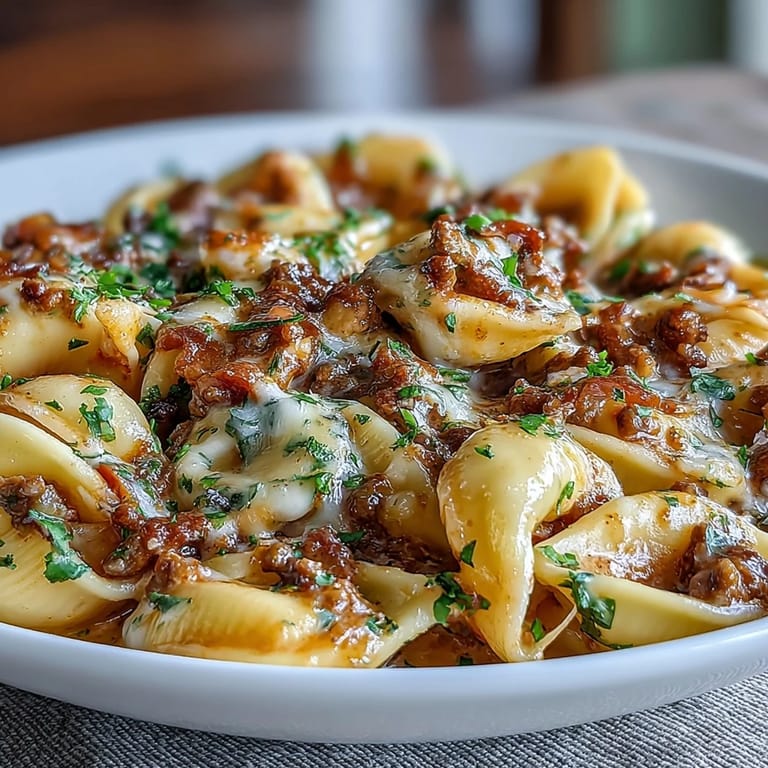
 This dish is proof that you don't need complicated techniques or obscure ingredients to feed people something they'll actually want to eat. It's the kind of recipe that becomes a regular in your rotation because it works every single time and everyone leaves the table satisfied.
Common Recipe Questions
- → Can I make this with ground turkey or chicken instead of beef?
Absolutely. Ground turkey or chicken work beautifully as lighter alternatives. Just keep in mind they're leaner, so you might want to drizzle in a little olive oil when browning to prevent sticking. The cooking time remains the same, though you may want to adjust seasoning slightly since poultry has a milder flavor than beef.
- → What type of pasta shells work best?
Medium pasta shells are ideal because they hold the creamy sauce in their curves. If you can't find shells, medium macaroni, rigatoni, or even penne would work well. Just avoid tiny pasta like ditalini or large shapes like jumbo shells—the cooking time and liquid absorption will be off.
- → Can I make this ahead and reheat it?
This dish reheats beautifully. Store it in an airtight container in the refrigerator for up to 4 days. When reheating, add a splash of milk or broth to loosen the sauce as it tends to thicken when chilled. Warm gently over medium-low heat, stirring occasionally, until heated through. The pasta may absorb more liquid overnight, so that extra splash helps restore the creamy consistency.
- → How can I make this lighter without losing the creamy texture?
Replace the heavy cream with half-and-half or use more whole milk instead. You can also reduce the cheddar cheese slightly and boost the Parmesan, which has a more intense flavor per gram. Another trick is adding a small dollop of Greek yogurt at the end—it provides creaminess with less fat. The sauce will still be satisfying, just slightly less rich.
- → What vegetables can I add to boost the nutrition?
Baby spinach works wonderfully—stir it in during the last 2 minutes of cooking so it wilts but stays bright. Frozen peas are another easy addition; toss them in when you add the pasta. For more texture, diced bell peppers or zucchini can be sautéed along with the onions. Just remember that adding vegetables increases the volume, so you might want an extra splash of broth to keep the sauce consistency right.
- → Is the crushed tomato sauce spicy?
No, the base isn't spicy. The heat comes from optional red pepper flakes. If you're sensitive to spice, simply omit them entirely. The Italian seasoning, paprika, and garlic provide plenty of flavor without any heat. For a mild kick, add just a pinch of the flakes, or go up to ½ teaspoon if you enjoy some warmth.