 Save to Pinterest
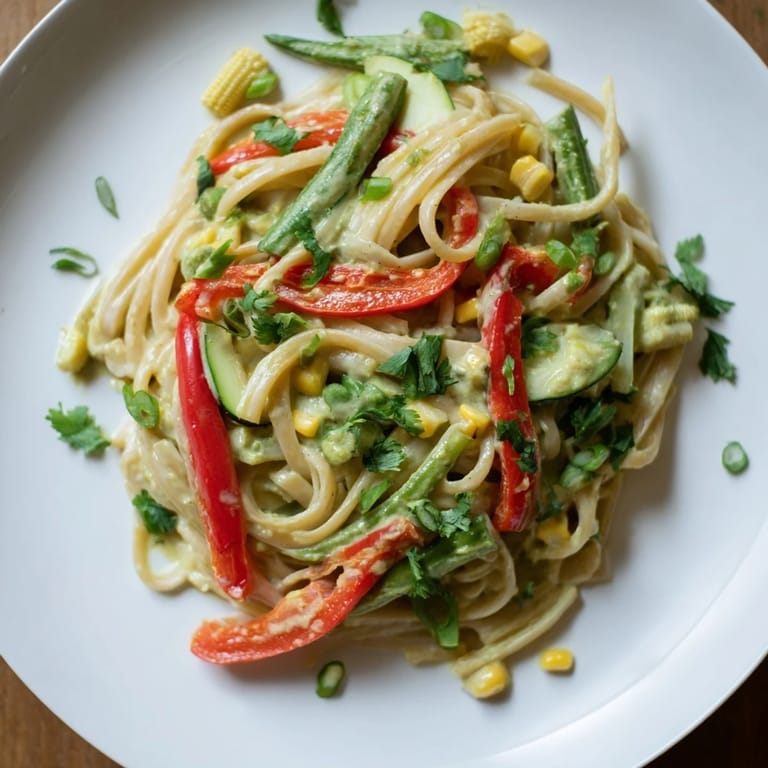
 I discovered this dish on a rainy Tuesday when I had a can of coconut milk and leftover linguine staring at me from the pantry. Instead of making the same old pasta, I grabbed a jar of Thai green curry paste from the back of the shelf—a souvenir from a cooking class I'd almost forgotten about—and decided to see what would happen. Twenty minutes later, my kitchen smelled like a Bangkok street market, and I was completely hooked on how the creamy, spiced sauce clung to every strand of pasta.
My partner walked in just as I was plating the first batch, and the smell stopped them dead in their tracks. They're usually skeptical of fusion experiments, but one bite changed their mind—suddenly we were both scraping the pan and talking about making it again next week. That's when I knew this recipe had staying power.
Ingredients
- Linguine or spaghetti (350 g): The thinner pasta grabs the curry sauce beautifully and doesn't overpower the delicate vegetables.
- Salt (1 tbsp): This isn't just for flavor—it seasons the pasta water properly so every strand tastes intentional.
- Red bell pepper: Thinly sliced, it stays crisp and adds sweetness that balances the curry's heat.
- Zucchini: Cut into half-moons for consistent cooking and a tender-but-bouncy texture.
- Snap peas and baby corn (100 g each): These keep their crunch, providing textural contrast against the creamy sauce.
- Spring onions and fresh cilantro: Stirred in at the end, they bring brightness and freshness that ties everything together.
- Vegetable oil (2 tbsp): Use a neutral oil so the curry paste can be the star.
- Thai green curry paste (3 tbsp): This is your flavor foundation—taste your brand first, as heat levels vary wildly.
- Coconut milk (400 ml): Full fat is non-negotiable here; it creates that luxurious, silky sauce.
- Soy sauce (1 tbsp): Adds umami depth and a subtle saltiness that rounds out the flavors.
- Brown sugar (1 tbsp): A touch of sweetness mellows the curry's intensity without making it dessert-like.
- Ginger (1 tsp, freshly grated): Grate it just before using so you get those spicy, bright notes.
- Lime juice: The final squeeze wakes up everything and prevents the dish from feeling heavy.
Tired of Takeout? 🥡
Get 10 meals you can make faster than delivery arrives. Seriously.
One email. No spam. Unsubscribe anytime.
Instructions
- Start your pasta:
- Boil a large pot of generously salted water—it should taste like the sea. Add your pasta and cook until it's just shy of fully tender, because it'll continue softening in the curry sauce.
- Build the curry base:
- Heat oil in your skillet and add the curry paste with ginger, stirring constantly for a minute or two until the smell becomes almost intoxicating. You're blooming the spices, waking them up from their paste sleep.
- Create the sauce:
- Pour in coconut milk, soy sauce, and brown sugar, then let everything simmer gently, stirring often so nothing catches on the bottom. This is when your kitchen transforms—that aroma is pure magic.
- Add the vegetables:
- Toss in your bell pepper, zucchini, snap peas, and baby corn, and let them cook until they're tender but still have a slight firmness when you bite them. This usually takes about 5-6 minutes, depending on how you like your vegetables.
- Marry pasta and sauce:
- Add your drained pasta and a splash of that reserved starchy water to the skillet, tossing everything together so the pasta soaks up all that golden, fragrant curry goodness. A simmer for 2-3 minutes lets it all get acquainted.
- Finish with brightness:
- Stir in spring onions, cilantro, and lime juice, tasting as you go to adjust the balance of spice, salt, and tang to your preference.
 Save to Pinterest
 There was a night when I made this for friends who'd just moved into the neighborhood, and watching them realize it was vegetarian changed something. One of them said it tasted better than the curry she'd paid good money for at a fancy place downtown, and honestly, that moment made me feel like I'd discovered something worth sharing.
Choosing Your Curry Paste Wisely
Not all Thai green curry pastes are created equal. Some are fiery enough to make you reconsider your life choices, while others are surprisingly mild. I learned this the hard way by buying three different brands and tasting each one with a tiny spoon before committing. Buy from a brand you trust, or if you're feeling ambitious, make your own with fresh green chilies, garlic, ginger, lemongrass, and coconut milk blended smooth. Your taste buds will thank you, and you'll know exactly what went into your sauce.
Vegetable Flexibility and Swaps
This dish thrives on adaptation. On nights when I don't have snap peas, I've thrown in broccoli florets, sliced carrots, or even a handful of spinach that wilts right into the sauce. The only rule I follow is to cut everything to roughly the same size so everything cooks at the same pace. Once you understand the base, you're free to build your own version based on what's in your crisper drawer.
Making It Your Own
The beauty of this recipe is that it's a starting point, not a final word. I've made it with chicken thighs that I cook in the sauce from the beginning, with shrimp that only need two minutes, with tofu that soaks up every bit of flavor. On days when I want extra richness, I add a splash more coconut milk or finish with a drizzle of sesame oil. The dish is patient and forgiving—it welcomes your creativity.
- Protein additions like chicken, shrimp, or extra-firm tofu turn this into an even heartier meal.
- A splash of fish sauce or coconut aminos can deepen the umami if you're craving extra savory complexity.
- Serve with jasmine rice on the side if you want to stretch it further and soak up every last drop of sauce.
 Save to Pinterest
 This recipe became my go-to answer when someone asks me to bring something to dinner or when I need to feel like I'm traveling without leaving my kitchen. It's proof that fusion cooking doesn't have to be complicated—just respectful and delicious.
Common Recipe Questions
- → What pasta works best with Thai green curry sauce?
Long pasta types like linguine or spaghetti hold the curry sauce well, balancing texture and flavor.
- → Can this dish be prepared vegan?
Yes, using curry paste free of shrimp or fish sauces ensures a vegan-friendly version.
- → How do I adjust the spiciness of the curry sauce?
Modify the amount of green curry paste added or include sliced red chili for extra heat.
- → What vegetables complement the curry pasta?
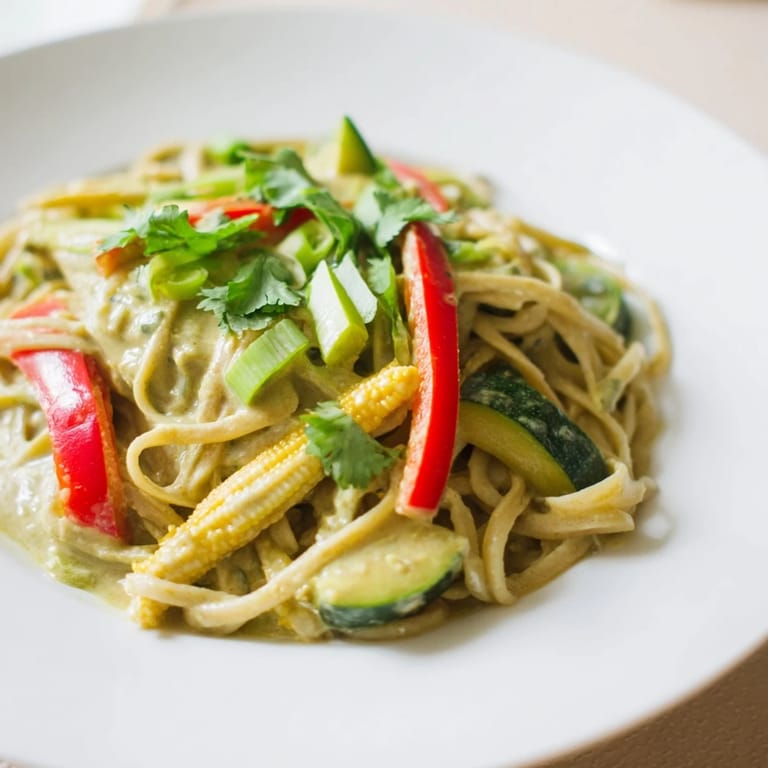
Bell pepper, zucchini, snap peas, baby corn, and spring onions provide vibrant flavors and crisp textures.
- → Are there suggested protein additions for this dish?
Cooked chicken, shrimp, or tofu can be added for extra protein while maintaining balance with the curry flavors.
- → How can I prevent the pasta from drying out?
Reserve some pasta water before draining and add it to the sauce to help the curry coat the pasta evenly.