 Save to Pinterest
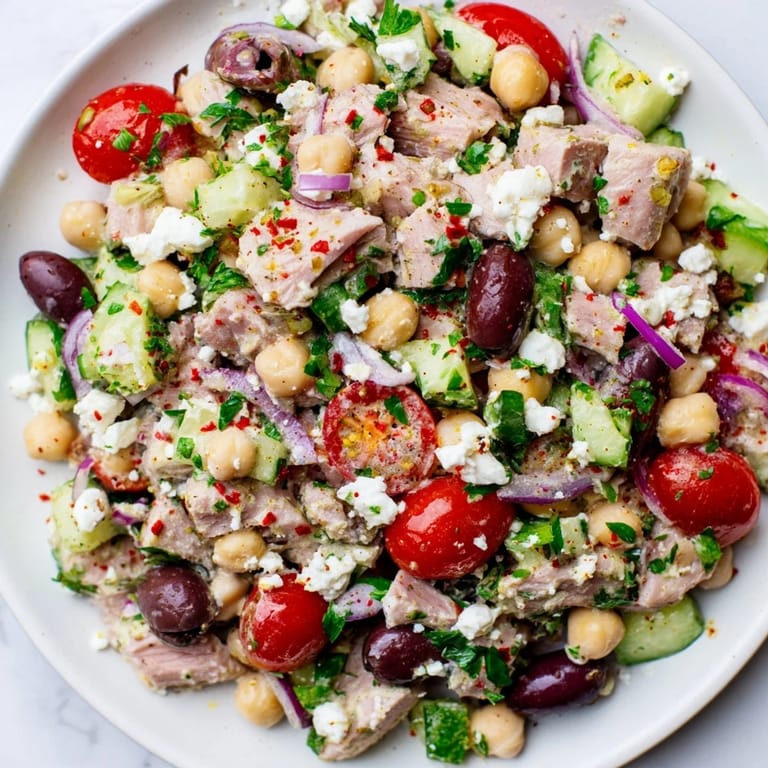
 I discovered this salad by accident on a Tuesday afternoon when my fridge was nearly empty but my pantry was overflowing. Two cans of tuna, a lonely can of chickpeas, and some vegetables that were about to go soft became the foundation for what I now make almost weekly. The moment I tasted that first bite—the briny tuna mixed with creamy chickpeas and the brightness of fresh lemon—I realized I'd stumbled onto something that felt both nourishing and exciting.
I made this for a friend who'd just started meal prepping, and watching her eyes light up when she realized it tasted even better the next day was worth every chopped vegetable. She now keeps it in rotation, and I've heard her describe it to others as "the salad that doesn't get boring." That moment shifted how I think about simple food—sometimes the most powerful dishes are the ones that quietly deliver what you actually need.
Ingredients
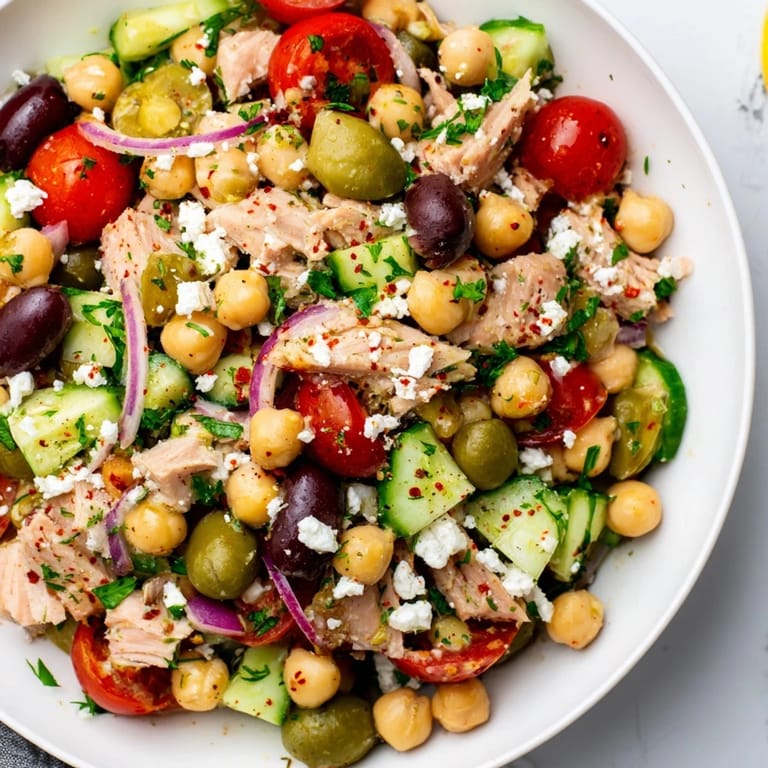
- Chickpeas (15 oz can, drained and rinsed): These little legumes are the secret MVP, adding heft and creaminess while keeping everything plant-forward enough to balance the fish.
- Tuna in water (2 cans, 5 oz each, drained): Don't overthink the brand, but do drain it well so the salad isn't watery.
- Cherry tomatoes (1 cup, halved): They burst with sweetness and provide the salad's natural acidity counterpoint.
- Cucumber (1 small, diced): The refreshing crunch that keeps every bite interesting.
- Red onion (1/4, finely chopped): Sharp and almost spicy, it cuts through the richness beautifully.
- Fresh parsley (1/4 cup, chopped): This isn't decorative—it adds a grassy brightness that ties everything together.
- Kalamata olives (1/4 cup, sliced, optional): They add that briny, umami punch that reminds you this came from somewhere salty and real.
- Extra virgin olive oil (3 tbsp): The foundation of the dressing, so choose one you'd actually want to eat on bread.
- Fresh lemon juice (2 tbsp): Freshly squeezed makes a difference here, no bottled shortcuts.
- Dijon mustard (1 tsp): A tiny amount acts like an emulsifier and adds a subtle tang.
- Garlic (1 clove, minced): Raw and punchy, but use a microplane so it disperses evenly.
- Salt (1/2 tsp) and black pepper (1/4 tsp): Season to taste after tossing.
- Feta cheese (1/4 cup crumbled, optional) and red pepper flakes (optional): The finishers that add richness and heat if you're not going dairy-free.
Tired of Takeout? 🥡
Get 10 meals you can make faster than delivery arrives. Seriously.
One email. No spam. Unsubscribe anytime.
Instructions
- Assemble the foundation:
- Drain your chickpeas and tuna well, then combine them in a large bowl with the tomatoes, cucumber, red onion, parsley, and olives if using. You'll feel the mix of textures, and that's exactly right.
- Make the dressing magic:
- In a small bowl, whisk the olive oil, lemon juice, mustard, and minced garlic until it becomes creamy and pale. This emulsification is what makes the dressing coat everything instead of pooling at the bottom.
- Bring it all together:
- Pour the dressing over the salad and toss gently but thoroughly, making sure every piece gets kissed with the tangy lemon flavor. The salad will look glossy and alive.
- Finish strong:
- Add the feta and a pinch of red pepper flakes right before serving if you want them, or hold back if dairy-free is your path. The salad can sit in the fridge for up to 2 days, actually tasting better as flavors meld overnight.
 Save to Pinterest
 There's something deeply satisfying about eating something this good for you and knowing it took barely any time. One evening I sat down with this salad, no phone, no distraction, and it reminded me that nourishing yourself doesn't have to be complicated or time-consuming.
Why This Combination Works
Tuna and chickpeas together create a complete protein that actually satisfies in a way single proteins sometimes don't. The chickpeas add texture and earthiness while the tuna brings that salty, umami depth. It's the kind of pairing that feels natural once you've tasted it, though it surprised me the first time I discovered how well they complement each other instead of competing.
Prep and Storage Wisdom
I learned quickly that this salad actually improves with time, unlike greens-based salads that wilt. The flavors marry together, the chickpeas soften slightly and absorb the dressing, and by day two it tastes even better than day one. The trick is keeping the dressing separate until you're ready to eat if you're making it ahead, though honestly, I often just mix it all together and don't mind the slightly mellowed flavor.
Creative Ways to Serve It
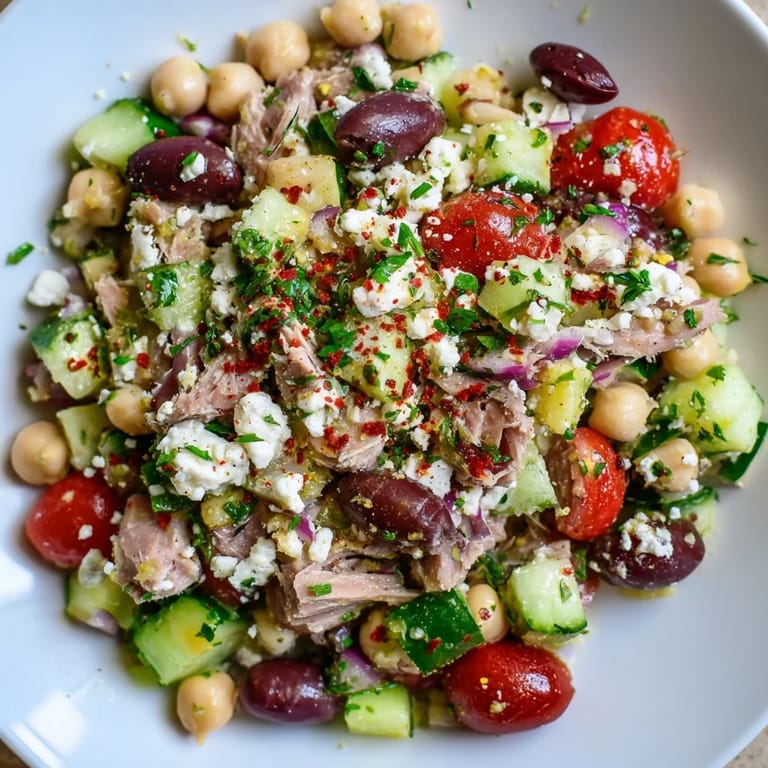
Eat it as a bowl, stuff it into pita pockets, pile it on greens, or even use it as a sandwich filling if you're feeling adventurous. I've served it at picnics, brought it to work in mason jars, and even presented it as a side dish at potlucks where it somehow became the most requested recipe. The salad is endlessly flexible, which is part of why I keep coming back to it.
- Toss it with mixed greens for a lighter meal that feels more substantial.
- Add diced avocado just before serving for extra creaminess and richness.
- Swap the feta for a dollop of Greek yogurt if you want protein and creaminess without the sharpness of cheese.
 Save to Pinterest
 This salad has quietly become the thing I make when I want to feel good, eat well, and not spend an hour in the kitchen. It's the kind of recipe that works harder than it looks.
Common Recipe Questions
- → Can I substitute canned tuna with fresh tuna?
Yes, seared or grilled fresh tuna can be used as a substitute, adding a more robust texture and flavor.
- → How can I make this bowl dairy-free?
Simply omit the feta cheese topping or replace it with a dairy-free alternative like nutritional yeast or avocado.
- → What are good additions for extra crunch?
Diced bell pepper, celery, or toasted nuts can add a satisfying crunch and enhance texture variety.
- → Is this dish suitable for meal prep?
Absolutely. The flavors develop well after a few hours and it can be refrigerated for up to two days.
- → Can the dressing be altered for different tastes?
The lemon and Dijon mustard dressing is versatile; you can adjust acidity or swap mustard for honey mustard or a dash of vinegar.