 Save to Pinterest
 I stumbled onto the magic of power bowls during a chaotic Tuesday when I had exactly twenty minutes to transform a half-empty fridge into something that felt intentional. The smell of roasting vegetables filled my kitchen while quinoa bubbled quietly on the stove, and suddenly I realized I was building not just a meal, but something that made my body feel genuinely grateful. That bowl changed how I think about leftovers and meal prep—it's become the canvas where I experiment with whatever the season offers.
My friend Sarah brought her new partner to dinner on a rainy October evening, and I served these bowls with homemade hummus and crusty bread. Watching them eat something I'd made with such simple, honest ingredients sparked this conversation about how food doesn't need to be complicated to be memorable—it just needs to taste alive.
Ingredients
- Quinoa, rinsed: Rinsing removes the bitter coating and prevents a weird chalky texture; I learned this the hard way and never skip it now.
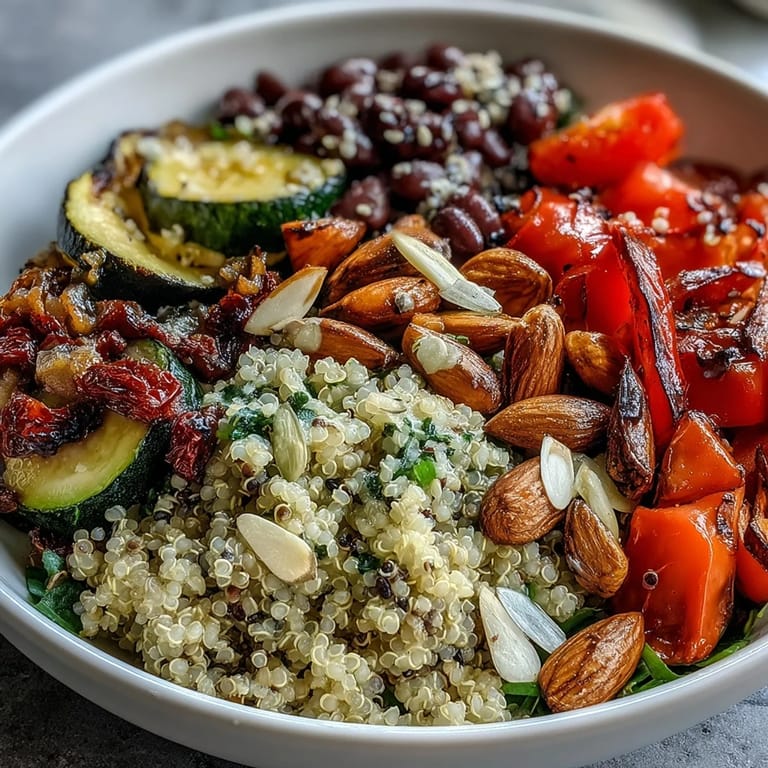
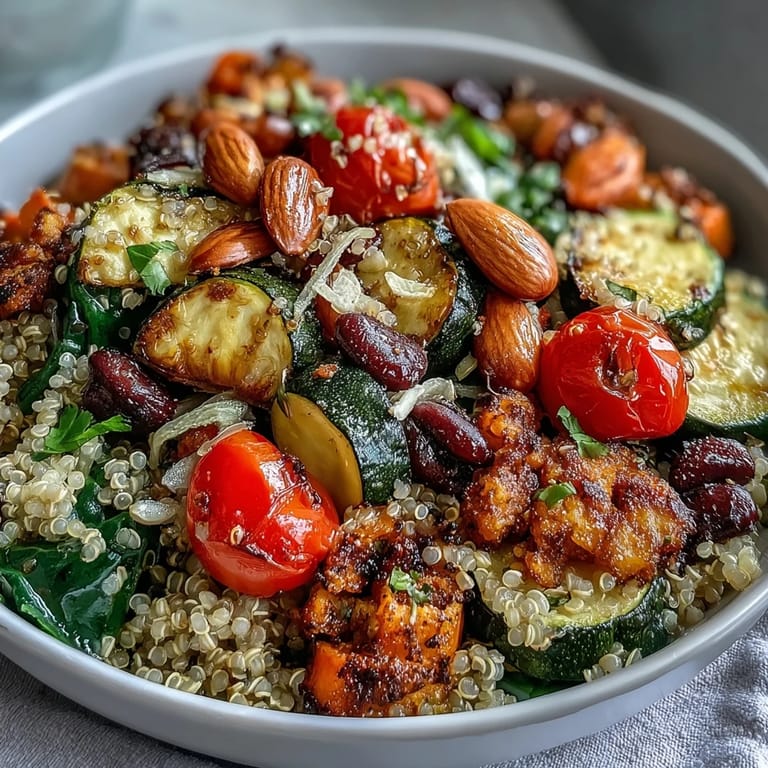
- Red bell pepper, zucchini, carrot, red onion, cherry tomatoes: These vegetables caramelize beautifully in the oven, developing a sweetness that balances the sharp vinaigrette.
- Olive oil and oregano: The combination creates a Mediterranean flavor that makes everything taste more intentional than it actually is.
- Black beans or chickpeas: Either works perfectly; I choose based on what's already in my pantry and what I'm craving that week.
- Roasted almonds or walnuts and pumpkin seeds: These provide texture and keep the bowl interesting from first bite to last.
- Extra virgin olive oil: Use a good one here since it's not being cooked; it matters more than you'd think.
- Fresh lemon juice, Dijon mustard, maple syrup, garlic: This vinaigrette is the actual heart of the bowl—it transforms everything from pleasant to genuinely crave-worthy.
Tired of Takeout? 🥡
Get 10 meals you can make faster than delivery arrives. Seriously.
One email. No spam. Unsubscribe anytime.
Instructions
- Heat your oven and prepare vegetables:
- Set the oven to 425°F and arrange your diced vegetables on a baking sheet. Drizzle generously with olive oil and season with oregano, salt, and pepper, tossing until everything glistens.
- Roast until golden:
- Slide the pan into the oven for 20 to 25 minutes, stirring halfway through. You're looking for tender vegetables with caramelized edges that smell absolutely irresistible.
- Cook the quinoa:
- While vegetables roast, bring quinoa and water to a boil in a saucepan. Reduce heat, cover, and simmer for 15 minutes, then remove from heat and let it sit covered for 5 minutes before fluffing with a fork.
- Make the vinaigrette:
- In a small bowl, whisk together olive oil, lemon juice, Dijon mustard, maple syrup, minced garlic, salt, and pepper. Taste and adjust—this is where the bowl gets its personality.
- Assemble and serve:
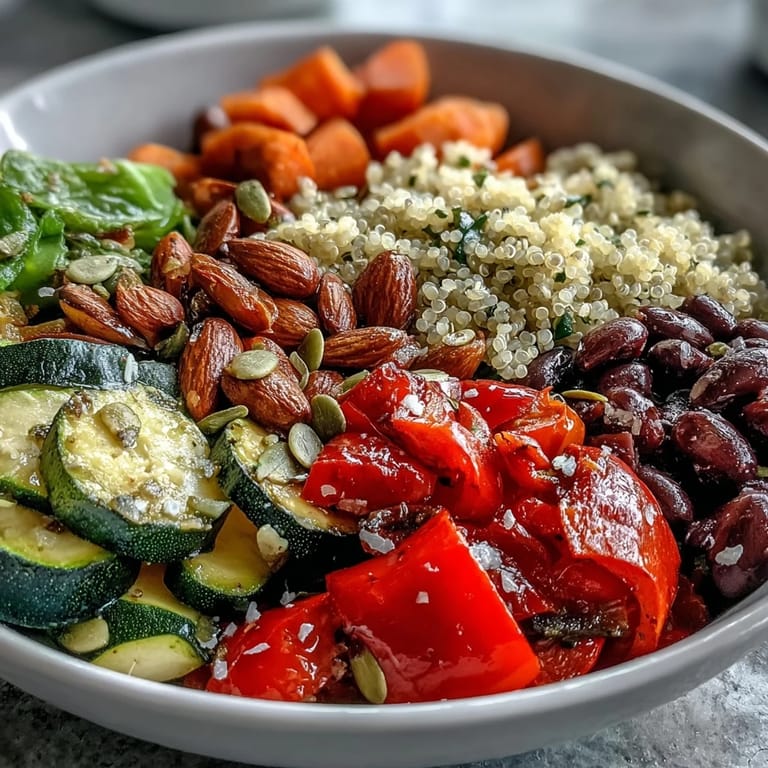
- Divide fluffy quinoa among four bowls, then layer on the roasted vegetables, beans, nuts, and seeds. Drizzle generously with vinaigrette and serve warm, or chill for a refreshing cold version.
 Save to Pinterest
 I made these bowls for myself during a particularly heavy week, eating the same one three days in a row without getting tired of it. There's something grounding about a meal that nourishes without demanding anything complicated from you, and I think that's when I really understood what made this recipe stick around.
The Beauty of Seasonal Swaps
The genius of this bowl lies in its flexibility. In summer I use raw corn and fresh tomatoes, while winter brings roasted sweet potato and brussels sprouts. Spring calls for tender asparagus and peas, and fall begs for butternut squash and mushrooms. Once you understand the basic formula—grains, roasted vegetables, beans, crunch, dressing—you stop thinking of recipes as rigid instructions and start seeing them as frameworks for your own creativity.
Building Layers of Flavor
The magic happens when you think about contrasts: the earthiness of quinoa meets bright lemon, roasted vegetables provide sweetness against Dijon's sharpness, and nuts offer textural interruption. I've learned that a bowl without texture feels incomplete, so don't be shy with the nuts and seeds. If you're avoiding nuts due to allergies, sunflower seeds and pumpkin seeds alone create plenty of crunch and substance.
Make It Your Own
This bowl becomes infinitely more interesting when you add your own touches. I've experimented with everything from crispy chickpeas to fresh herbs scattered on top, and each version tells a slightly different story. The formula stays steady while the details shift, which is exactly what makes it a recipe worth keeping.
- Try adding a poached egg or grilled tofu if you want extra protein without changing the core structure.
- Fresh herbs like cilantro, parsley, or dill scattered on top just before serving add brightness that tastes like restaurant-quality effort.
- A crumble of feta cheese transforms it into something richer, or stick with the vegan version and use maple syrup in the dressing.
 Save to Pinterest
 This bowl has become my go-to answer when someone asks what I'm eating for lunch, because it's never the same twice and it always tastes exactly right. It's the kind of recipe that quietly changes how you cook, turning you into someone who thinks in terms of balance and possibility.
Common Recipe Questions
- → Can I make this bowl ahead of time?
Absolutely. The quinoa and roasted vegetables keep well in the refrigerator for up to 4 days. Store the vinaigrette separately and drizzle it just before serving to maintain freshness. Add nuts and seeds right before eating to preserve their crunch.
- → What other vegetables work well in this bowl?
Sweet potato, broccoli, cauliflower, Brussels sprouts, and butternut squash all roast beautifully alongside the vegetables listed. Feel free to use whatever seasonal produce you have on hand. The key is cutting everything into similar-sized pieces for even roasting.
- → Is this bowl gluten-free?
Yes, quinoa is naturally gluten-free, making this bowl suitable for those avoiding gluten. Just be sure to check that your vegetable broth and any other packaged ingredients are certified gluten-free if you have celiac disease or severe gluten sensitivity.
- → Can I use different beans?
Certainly. Chickpeas, kidney beans, white beans, or even lentils work wonderfully in place of black beans. Each brings slightly different texture and flavor, so feel free to experiment with your favorites or whatever you have in your pantry.
- → How do I store leftovers?
Store each component separately in airtight containers in the refrigerator. The quinoa and vegetables will keep for 4-5 days, while the vinaigrette stays fresh for up to a week. For the best texture, reheat the quinoa and vegetables slightly before assembling your bowl.
- → Can I add protein to make it more filling?
Yes, grilled tofu, tempeh, or a poached egg would complement the flavors nicely. Shredded chicken or baked salmon also work well if you eat meat. The quinoa and beans already provide substantial protein, but these additions can make the bowl even more satisfying.