 Save to Pinterest
 I discovered Korean BBQ nachos by accident at a late-night kitchen experiment when I had leftover gochujang beef and a bag of tortilla chips staring at me from the pantry. The idea seemed ridiculous at first—mixing Korean flavors with a Tex-Mex staple—but something told me these two worlds belonged together. Twenty minutes later, I was pulling a bubbling sheet of cheese and caramelized beef out of the oven, and my friends couldn't stop reaching for more. It became the dish I make whenever I want to feel clever in the kitchen without spending hours fussing.
The first time I made these for friends during a casual weeknight dinner, someone asked if this was from a restaurant, and I realized I'd stumbled onto something special. There's a particular joy in watching people's faces light up when they taste something they didn't expect to work, and Korean BBQ nachos have that magic every single time.
Ingredients
- Flank steak or sirloin, thinly sliced: The thinner you slice it, the faster it cooks and the more sauce it absorbs—I learned to freeze the meat for thirty minutes beforehand, which makes slicing so much easier.
- Gochujang: This Korean chili paste is the soul of the dish, bringing umami depth and a subtle heat that builds rather than burns.
- Soy sauce: Acts as a seasoning anchor, balancing the sweetness and spice.
- Brown sugar: Creates caramelization on the beef and rounds out the marinade's flavor profile.
- Sesame oil: Use real toasted sesame oil, not the cheap stuff—it transforms the marinade with its nutty, aromatic depth.
- Garlic and ginger: Fresh is non-negotiable; minced and grated give you more surface area for flavor.
- Rice vinegar: A splash of brightness that keeps the marinade from being one-dimensional.
- Tortilla chips: Look for sturdy chips that won't dissolve under cheese and toppings; thicker, corn-forward chips work better than thin ones.
- Mozzarella and Korean cheese blend: Mozzarella provides stretch, while the Korean cheese (or cheddar blend) adds sharpness and color.
- Red onion, carrot, and cucumber: These fresh vegetables provide crunch and brightness against the rich, warm flavors.
- Scallions and red chili: Raw and sharp, they cut through the richness like a palate cleanser.
- Toasted sesame seeds: The finishing touch that adds toasted nuttiness and visual appeal.
- Kimchi and fresh herbs: Kimchi brings funky, spicy funk; cilantro or shiso adds herbal freshness depending on your mood.
Tired of Takeout? 🥡
Get 10 meals you can make faster than delivery arrives. Seriously.
One email. No spam. Unsubscribe anytime.
Instructions
- Build your marinade:
- In a bowl, whisk together gochujang, soy sauce, brown sugar, sesame oil, garlic, ginger, rice vinegar, and black pepper until smooth. This is where the magic happens—take a moment to taste it and adjust the balance; you want savory, slightly sweet, with gentle heat.
- Marinate the beef:
- Toss your thinly sliced beef with the marinade, making sure every piece is coated. Let it sit for at least twenty minutes—longer is fine and actually better, as the beef soaks up more flavor.
- Sear the beef:
- Heat a skillet over medium-high heat until it's smoking slightly. Working in batches so you don't overcrowd the pan, sear the marinated beef for two to three minutes until the edges are caramelized and it's cooked to your liking. You'll smell that incredible gochujang-beef aroma—that's your signal it's happening right.
- Build your nacho foundation:
- Preheat your oven to 200°C (400°F). Line a baking tray with parchment paper and spread tortilla chips in a single, slightly overlapping layer. Scatter half the shredded cheeses over the chips, breaking up any clumps so the heat distributes evenly.
- Layer and bake:
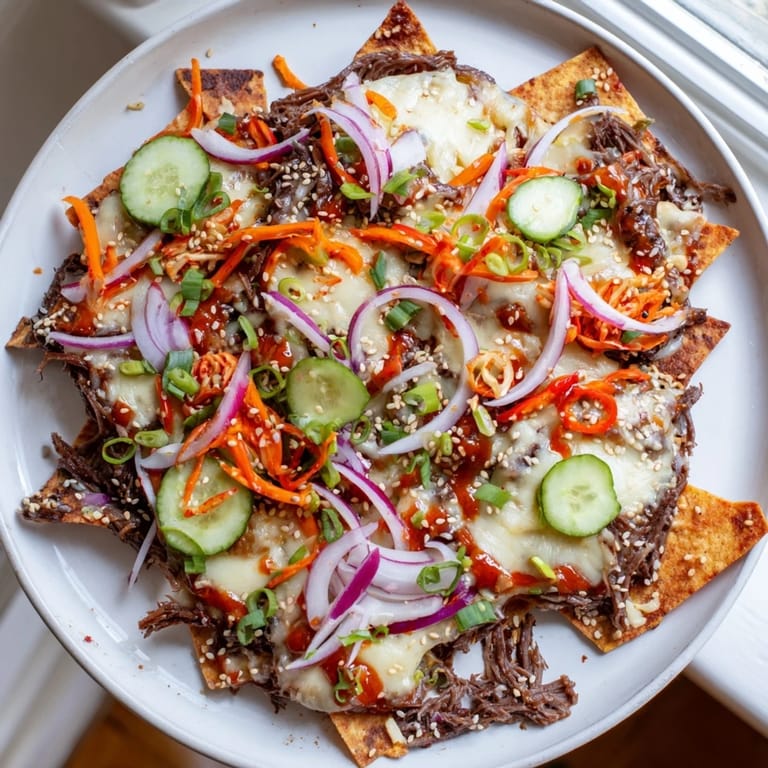
- Top the cheese with all of your seared beef, then finish with the remaining cheese. Slide the tray into the oven and bake for six to eight minutes, watching until the cheese is bubbling at the edges and just beginning to turn golden—this is the sweet spot before it gets greasy.
- Finish with fresh toppings:
- Remove the nachos from the oven and work quickly while the cheese is still melted. Scatter red onion, carrot, cucumber, scallions, red chili, and sesame seeds over the top. Finish with a handful of chopped kimchi and your herb of choice, then drizzle with sriracha mayo or gochujang mayo if you're using it.
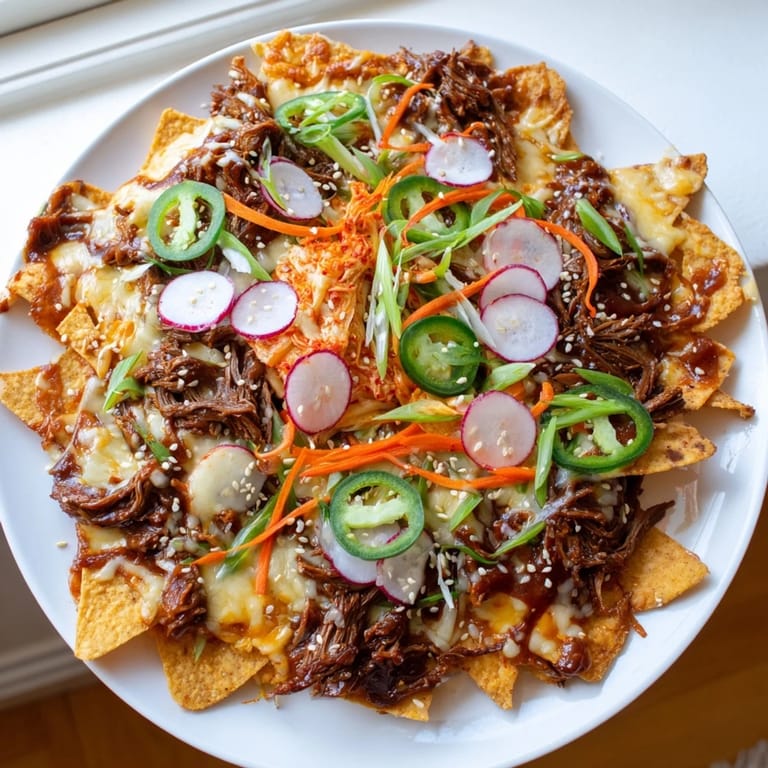 Save to Pinterest
 What I love most about this dish is how it breaks the unspoken rules of cooking and somehow becomes more delicious because of it. It's taught me that great food doesn't always live in tradition—sometimes it lives in the space where two cuisines meet and realize they've been waiting for each other all along.
The Marinade Method
The gochujang marinade is the secret weapon here, and understanding it changes how you approach Korean beef dishes altogether. I used to think gochujang was purely spicy, but it's really a complex paste loaded with fermented depth and umami. When you mix it with sweet brown sugar, savory soy sauce, and fragrant sesame oil, you create something that clings to the beef and actually gets better the longer it sits. The beef stops being just meat and becomes a vehicle for all those layered Korean flavors, caramelizing beautifully when it hits the hot skillet.
Playing with Proteins
While the beef version is my go-to, I've had equal success with grilled chicken breast and even marinated firm tofu for vegetarian friends. The key is slicing everything thin and giving it the same marinade treatment—the thinner the protein, the more surface area it has to absorb the gochujang magic. I once used thinly sliced portobello mushrooms, and they absorbed the marinade like a sponge, turning silky and deeply savory. The beauty of this dish is that the marinade carries so much flavor that the protein almost becomes secondary; it's really about what the gochujang can do.
Cheese, Heat, and Timing
Finding the right cheese blend was a small journey in itself—too much mozzarella and you get a greasy, one-note dish; too much cheddar and it breaks and separates. The combination of mozzarella for stretch and a Korean cheese blend (or mozzarella-cheddar mix) for sharpness creates a cheese situation that's both melty and interesting. The baking time is crucial because nachos live on the edge between cheesy perfection and a greasy, soggy mess. I set a timer and hover nearby; that six-to-eight-minute window is real, and even thirty seconds matters. Some ovens run hot, so start checking at five minutes and look for bubbling cheese with just the tiniest hint of browning at the edges.
- If you don't have Korean cheese blend, a combination of mozzarella and sharp cheddar works beautifully.
- Room-temperature tortilla chips bake more evenly than chips straight from a cool pantry.
- Pull the nachos out the moment the cheese bubbles; residual heat will continue melting everything even after they leave the oven.
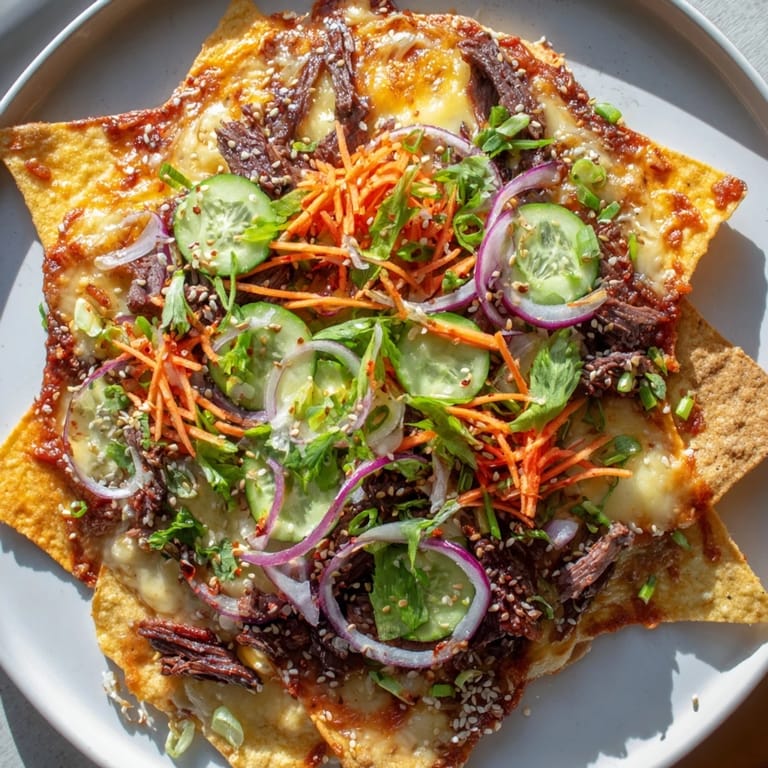 Save to Pinterest
 Korean BBQ nachos feel like a small act of kitchen rebellion, mixing cuisines and breaking rules in the name of deliciousness. Once you make them, they'll become the dish you reach for whenever you want to impress someone without making it look like an effort.
Common Recipe Questions
- → What cut of beef works best for this dish?
Flank steak or sirloin are ideal as they slice thinly and absorb the marinade well, providing tender, flavorful bites.
- → Can I make a vegetarian version?
Yes, substitute beef with marinated mushrooms or jackfruit and use vegetarian tortilla chips to keep the bold flavors intact.
- → How long should I marinate the beef?
Marinate the beef for at least 20 minutes to allow the gochujang and spices to infuse deep flavor.
- → What cheeses blend well for this dish?
A mix of shredded mozzarella combined with Korean pizza or cheddar-based cheese creates the perfect melt and richness.
- → Is it necessary to bake the assembled chips?
Baking melts the cheese evenly and warms the toppings, creating a bubbling, golden finish enhancing the textures and flavors.