 Save to Pinterest
 The first time I made sushi bake, I was standing in my kitchen on a rainy Tuesday, scrolling through my phone while waiting for salmon to cook, when it hit me: why was I rolling sushi when I could just layer everything like a casserole and let the oven do the work? It felt like cheating at first, but then I tasted it warm, all those familiar sushi flavors melting together in one dish, and I realized I'd stumbled onto something that felt less like compromise and more like genius.
I made this for my sister's dinner party last spring, and I watched her face light up when she realized it was warm and creamy, nothing like the sushi rolls she expected. Her friend went back for seconds, and then thirds, and by the end of the night, the casserole was completely gone. That's when I knew this recipe had staying power.
Ingredients
- Sushi rice: This is your foundation, and the difference between sticky, clingy rice and the right texture is really just rinsing it until the water runs clear and not skipping the resting step.
- Rice vinegar, sugar, and salt: These three ingredients transform plain rice into something with personality, and honestly, the ratios matter more than you'd think.
- Salmon fillet: Fresh and bright, or even high-quality frozen works beautifully here, and brushing it with soy and sesame oil while it bakes creates this nutty, salty crust you can't get any other way.
- Cream cheese and Kewpie mayo: The creamy layer is what makes this different from eating sushi cold, and Kewpie mayo has just a touch of sweetness that makes the whole thing feel richer.
- Avocado: Wait until the last moment to slice it so it doesn't brown, and pick avocados that yield to gentle pressure, not rock hard ones.
- Nori and sesame seeds: These add texture and that toasted, oceanic flavor that reminds you why you loved sushi in the first place.
- Spring onions: A scattered handful at the end adds a bright, slightly sharp note that cuts through the richness beautifully.
Tired of Takeout? 🥡
Get 10 meals you can make faster than delivery arrives. Seriously.
One email. No spam. Unsubscribe anytime.
Instructions
- Prepare the rice foundation:
- Rinse your rice until the water runs clear, which takes patience but removes the starch that makes rice gluey. Cook it gently with the right amount of water, and you'll know it's ready when a grain pressed between your fingers feels tender but still has structure.
- Season and layer:
- While the rice is still warm, fold in your vinegar mixture with a gentle hand so each grain gets coated without getting mashed. Spread it into your baking dish and press it down just enough to create a firm, even layer.
- Bake the salmon:
- A hot oven and a short baking time keep salmon moist and flaky, and you'll know it's done when it flakes easily with a fork and the thickest part is opaque.
- Make the creamy mixture:
- Fold your flaked salmon into the cream cheese mixture gently so it stays chunky and doesn't become a paste. The sriracha is optional, but a small amount adds a subtle heat that doesn't overwhelm.
- Assemble and warm:
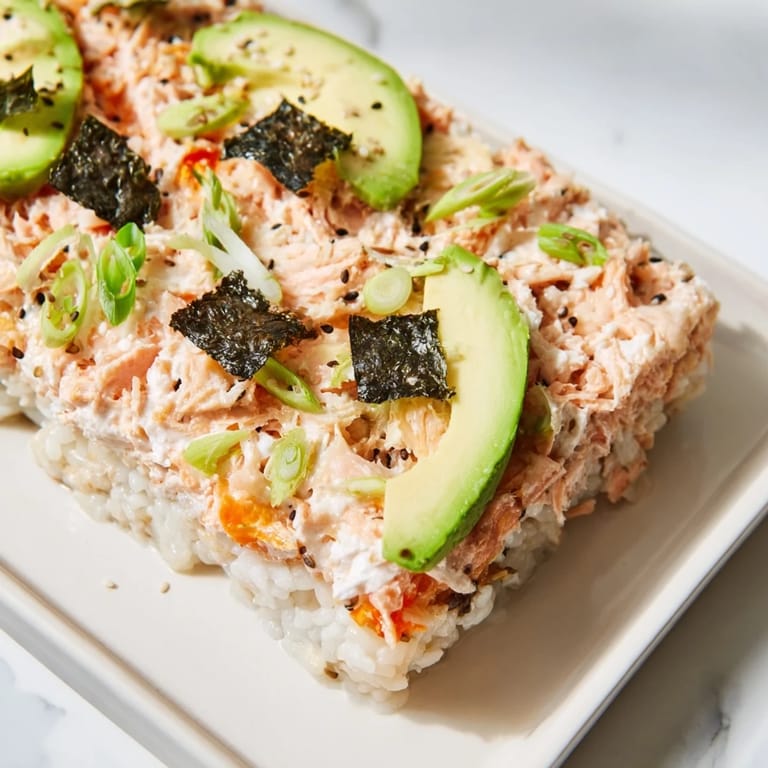
- Spread that salmon mixture over your rice layer and let the oven bring everything together for just 10 minutes until it's warm and the edges are barely golden.
- Top and serve:
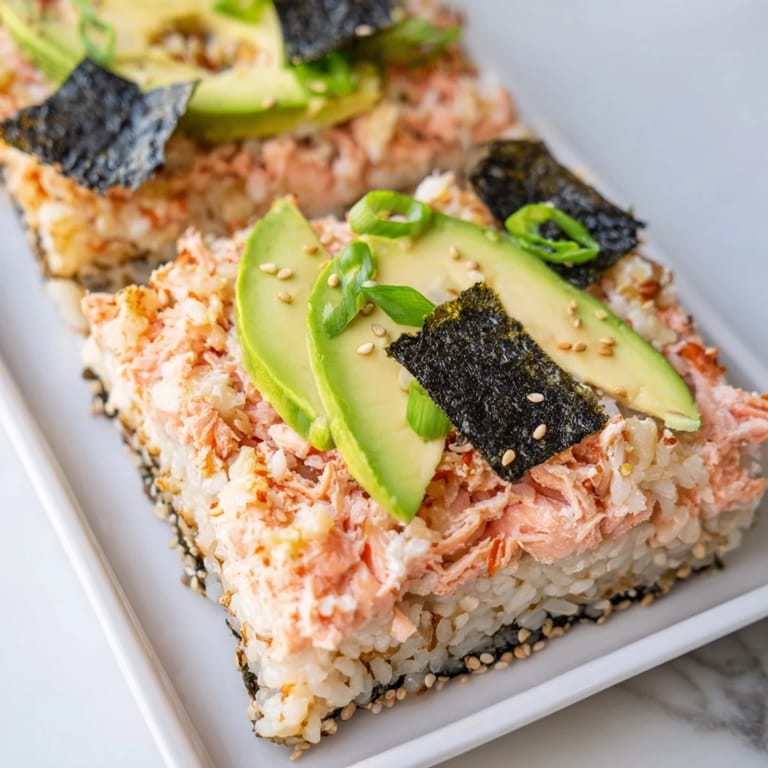
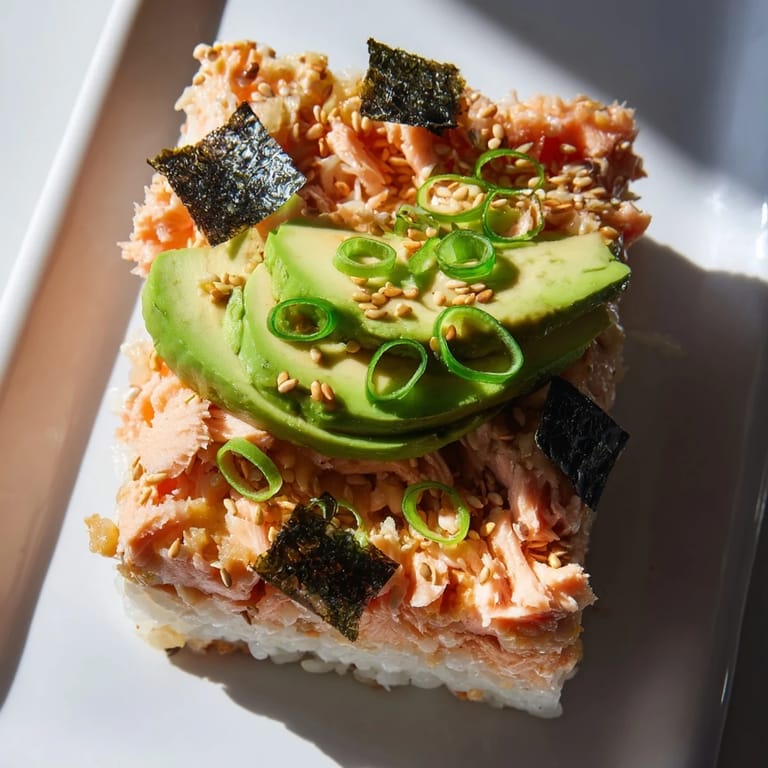
- This is where it all comes together: slice avocados at the last moment, scatter the nori and sesame seeds, and watch people's faces when they realize this warm, creamy, crunchy thing is the sushi they've been craving.
 Save to Pinterest
 The magic moment happens when you pull this out of the oven and the whole kitchen smells like sesame and salmon, and you know the people sitting at your table are about to feel like you pulled off something fancy when really you just layered things in a dish. That's the real win.
Why This Works as a Casserole
Baking sushi completely changes the experience in the best way. The heat brings all the flavors together instead of keeping them separate, and the rice stays warm long enough for everyone at the table to actually enjoy it, not just the person who got their roll first. Plus, warm cream cheese mixed with flaked salmon is comfort food that happens to be inspired by Japanese flavors, which somehow makes it feel both elegant and approachable at the same time.
Customizing Your Sushi Bake
This dish is forgiving, which is part of why I keep making it. If salmon isn't your thing, crab, shrimp, or even canned tuna works beautifully in its place. I've also skipped the sriracha when cooking for people who prefer gentle heat, and once I added panko breadcrumbs to the top before baking, and they crisped up into this golden, crunchy layer that people couldn't stop talking about. The base is solid enough that you can play with it and still end up with something delicious.
Serving and Pairing Ideas
Serve this warm, with small bowls of soy sauce, pickled ginger, and wasabi for people to add as they like, which gives everyone control over the flavor intensity. A crisp white wine like Sauvignon Blanc pairs beautifully because it cuts through the richness of the cream cheese and mayo, and if your guests prefer it, a chilled sake feels like the natural choice. Sometimes I make a simple cucumber salad on the side just to add something light and fresh to balance the richness, and it rounds out the whole meal.
- Let the casserole rest for five minutes after baking so the layers set slightly before you slice.
- Slice with a sharp, wet knife to keep the layers clean and intact.
- Serve immediately while the rice is still warm and the avocado is fresh.
 Save to Pinterest
 This sushi bake has become my go-to recipe when I want to feed people something that feels special without actually stressing me out. It's the kind of dish that brings people together around a warm casserole dish and reminds you that good food doesn't have to be complicated to be memorable.
Common Recipe Questions
- → Can I substitute the salmon with other seafood?
Yes, cooked crab meat, canned tuna, or cooked shrimp can be used as alternatives to salmon while maintaining a similar flavor profile.
- → How should the rice be prepared for the best texture?
Rinse the rice until water runs clear and cook it gently with water before fluffing with a vinegar, sugar, and salt mixture for balanced seasoning and texture.
- → What is the purpose of baking after assembling the layers?
Baking warms the casserole through, slightly melds the layers together, and creates a subtle golden top enhancing flavors and texture.
- → How do the toppings enhance the dish?
Fresh avocado adds creaminess, nori brings a subtle sea flavor, toasted sesame seeds offer nuttiness, and spring onions add freshness and crunch.
- → Are there any recommended side pairings?
A dry white wine like Sauvignon Blanc or chilled sake complements the layered flavors remarkably well.